

How often should you get up from sitting? The honest short answer is that no health authority has set a number, and the one trial that compared intervals head to head found the right dose depends on which marker you care about. Blood pressure responded to every walking dose tested, including the smallest. Post-meal glucose only shifted meaningfully at the heaviest. Cognitive performance did not improve at all. Below is what that trial did and did not show, and how far it can reasonably be pushed.
You are ninety minutes into a bug that has finally started to make sense, and a reminder slides in telling you to stand up. You dismiss it. Of course you dismiss it. Reloading a stack trace costs more than a lap of the kitchen appears to be worth, and nobody who set that reminder, including you, could say where the interval came from. Thirty minutes? An hour? One minute of walking or five? The advice arrives as a number with no receipt attached.
Nobody official has set a number

Start here, because it reframes everything downstream. The World Health Organization’s 2020 guidelines on physical activity and sedentary behaviour recommend that adults limit sedentary time and replace it with activity of any intensity, including light intensity, a strong recommendation resting on moderate-certainty evidence. What WHO pointedly did not do was attach a threshold. The evidence was judged insufficient to quantify how much sitting is too much, or how often it should be broken.
So when a productivity blog tells you to stand every thirty minutes and implies a health authority said so, no health authority said so. The direction of travel is well supported. The interval is somebody’s judgement call dressed up as a standard.
The one trial that compared break schedules head to head

Duran and colleagues ran a randomised crossover trial, published in Medicine & Science in Sports & Exercise in 2023, in which the same people worked through an eight-hour sitting day under five conditions: one minute of walking every thirty minutes, one minute every sixty, five minutes every thirty, five minutes every sixty, and sitting throughout. It is the rare study in this field that compares doses instead of asserting one.
Before the results, the size of the thing. Eleven participants. One acute day per condition, in a laboratory. A middle-aged and older adult sample, not a room full of mid-career backend engineers. The outcomes are surrogate markers measured within that day (blood pressure, post-meal glucose), not disease, not events. Every number below inherits all of that. It is the best available comparison of doses, not a measurement of what a break does to your body over a decade.
Blood pressure responded to every dose
All four walking schedules significantly lowered systolic blood pressure relative to sitting all day, by roughly 4 to 5 mmHg. The smallest dose in the trial, one minute of walking every hour, landed in that same band as the largest. If blood pressure is the marker you care about, this trial gives you no reason to think you need to break flow every half hour.
Read that figure narrowly. It is an acute, within-day difference in eleven older adults. It is not a sustained treatment effect, and nobody has shown that this schedule, held for a year, moves anyone’s clinic readings.
Glucose needed the big dose
Post-meal glucose behaved differently in the same eleven people. The largest attenuation required the heaviest schedule tested: five minutes every thirty minutes. That is sixteen interruptions and eighty minutes of walking across an eight-hour day, a materially different proposition from a one-minute hourly stretch. The cheap dose and the expensive dose buy different markers.
Cognition did not improve
Here is the finding that gets left out of the listicles. The trial measured cognitive performance across all five conditions, and no walking regimen improved it. Not the small dose, not the large one.
The trial did not find a cognitive benefit. With eleven participants it also could not have ruled out a small one. Both halves of that sentence matter.
What did shift was self-reported: every regimen except one minute every sixty minutes was associated with less fatigue and better mood. Those are questionnaire outcomes, in the same eleven people, on the same single days. Worth knowing about, and not evidence that your afternoon code review will go better.
That distinction is worth labouring, because “walking breaks make you sharper” is the version most often sold to technical workers, and the one trial that tested it inside this protocol did not find it. If you are weighing a break against an hour of deep work, do not put a focus benefit on the scale. It is the same pattern as the confidence gap that opens up when an AI assistant writes the code: the felt improvement and the measured one come apart.
Not a one-off, but not proof of anything long-term
An eleven-person trial should not carry a decision alone, so it helps that the broader picture points the same way. A 2020 systematic review and meta-analysis in Sports Medicine found that interrupting prolonged sitting with activity breaks blunts post-meal glucose, insulin and triacylglycerol responses compared with sitting continuously, with the glycaemic effect larger in people with higher BMI.
The pooled studies, though, are the same species as Duran’s: short acute laboratory protocols reading same-day surrogate markers. So the fair summary of this field is narrow. Breaking up sitting changes numbers in your blood on the day you do it, consistently, across many small studies. No trial has shown that any particular break schedule reduces cardiovascular events or diabetes over years. Anyone implying otherwise is extrapolating well past what was measured.
If you already have hypertension, diabetes or diagnosed cardiovascular disease, none of this is a reason to change how you manage it. Blood pressure and blood glucose are clinical territory. Take the schedule question to your clinician, who knows your numbers and your medications. See also our medical disclaimer.
Your standing desk is answering a different question
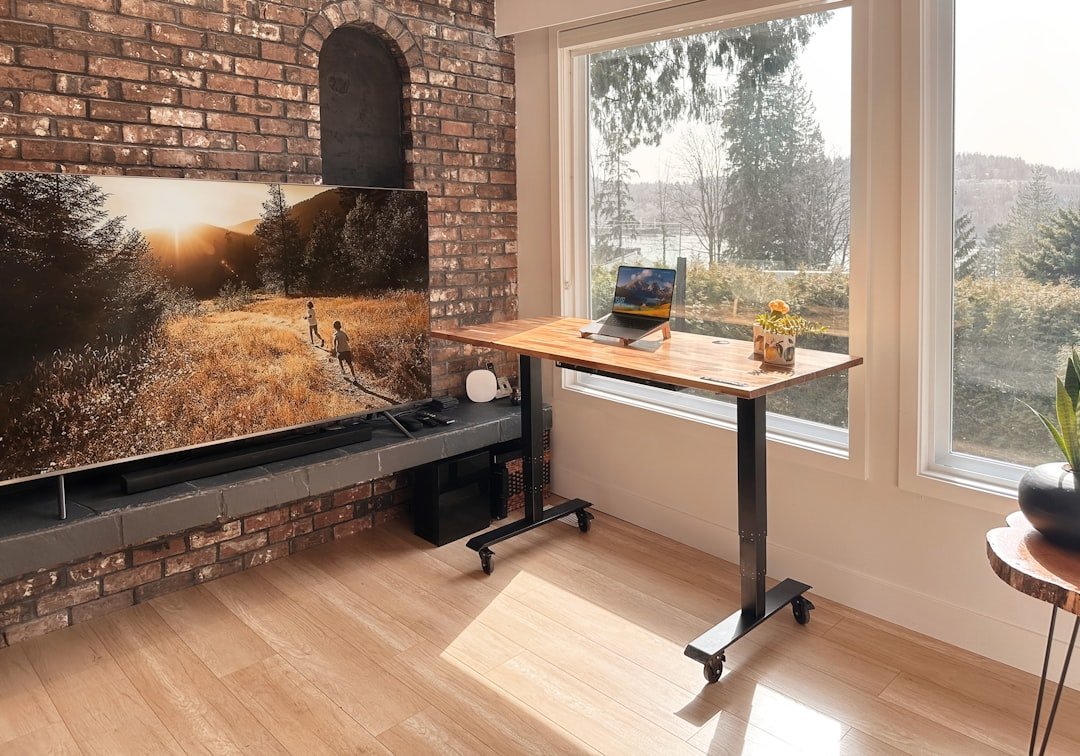
The reasonable objection here is that you already bought the sit-stand desk and stand for a chunk of the day, so surely this is handled. The largest relevant dataset says no. In a UK Biobank analysis of 83,013 adults with posture measured by accelerometer, standing time was not associated with lower cardiovascular disease incidence. Sitting beyond roughly ten hours a day and standing beyond roughly two hours a day were both associated with higher incidence of orthostatic circulatory conditions: orthostatic hypotension, varicose veins, chronic venous insufficiency, venous ulcers.
Now the caveats. This is observational, so association and not cause. The cohort skews older, posture is inferred from worn devices, and the per-hour risk increases are small in absolute terms. Not a reason to sell the desk, and not a scare story.
The usable point is a category error corrected. Swapping sitting for standing and swapping sitting for movement are different interventions, and the break-dosing evidence is built entirely on the second. Standing still at a raised desk is not what was tested. It changes your posture, and posture was never the active ingredient.
How often should you get up from sitting? A dose you can defend

Here is how I would translate the evidence above into a schedule. To be explicit: the four points below are my own reasoning applied to these studies, not findings from any of them. No trial has tested this combination, and none of these studies looked at adherence, meal timing in a normal working week, or the cost of interrupting deep work. You can read how TorpidLife handles that line between evidence and judgement.
- Default to one minute of walking every hour. It was the cheapest schedule tested and still moved systolic blood pressure as much as the heavy one. For a deep-work job, this is the dose that survives contact with reality, taken at a natural seam rather than mid-thought.
- Escalate to five minutes every thirty around meals. Post-meal glucose was the outcome that needed the heavier dose, so if you are going to spend the expensive schedule anywhere, spend it in the two or three hours after lunch rather than smearing it across the whole day.
- Do not schedule breaks as a focus intervention. A reminder justified on the grounds that it sharpens your thinking collapses the first busy week, because you will notice it isn’t happening. Justify it on what the evidence supports and it holds up better.
- Use whatever movement fits the room. Breaking up sitting with repeated chair stands reduced post-meal insulinemia in healthy adults, much as short walks did, in a small acute crossover study. Sixty seconds of standing up and sitting down is available on a muted call, in a shared office, in a room with nowhere to walk to.
One note worth more than the numbers: hourly beats half-hourly mostly because you will actually do it. A schedule you dismiss sixteen times a day delivers a dose of zero, and the trial says nothing about that, because everyone in it complied.
Common questions
Is thirty minutes actually the magic interval?
No, and nothing official designates it. WHO explicitly declined to set a numeric sedentary-time threshold. In the one trial that compared intervals directly (eleven adults, one acute lab day per condition), thirty-minute breaks only outperformed hourly ones on post-meal glucose; systolic blood pressure responded to every dose tested.
Does one minute of walking really do anything?
In that trial, one minute every hour lowered systolic blood pressure about as much as five minutes every half hour, acutely, on a single lab day in eleven older adults. It did not produce the glucose benefit, and it was the one regimen that did not shift self-reported fatigue and mood.
Do walking breaks help you concentrate?
The trial that measured cognitive performance under these exact schedules found no improvement from any of them. With eleven participants it was too small to rule out a small effect, but there is no positive finding here to lean on, and no evidence that breaks improve focus or productivity.
Can I count time spent standing at my desk?
Not toward this. Standing time was not associated with lower cardiovascular disease incidence in the 83,013-person UK Biobank analysis, and the break-dosing trials all tested movement rather than posture. A sit-stand desk solves other problems; it does not deliver the dose described here.
If I run in the evening, can I skip the breaks?
None of the evidence here tests that comparison, so anyone answering confidently is guessing. The break literature shows that interrupting sitting changes same-day metabolic markers; whether a workout elsewhere substitutes for that is not something these trials were built to answer.
Setting an interruption budget under uncertainty
The temptation is to find the number and oversell it, because a confident number is easier to act on. What you are actually doing is setting an interruption budget under uncertainty. Eleven people in a lab tell you that cheap and expensive doses buy different markers. Dozens of similar small studies say the direction is real. Nobody has shown you what any of it does over ten years.
Still enough to act on, as long as you act on the right thing. Stand up once an hour because the cardiometabolic evidence, thin as it is, points one way and the cost is sixty seconds. Not because someone promised you a clearer head. The first reason will still be true next quarter.
Did this answer your question?
Thanks. That helps us decide what to fix.



Leave a comment