
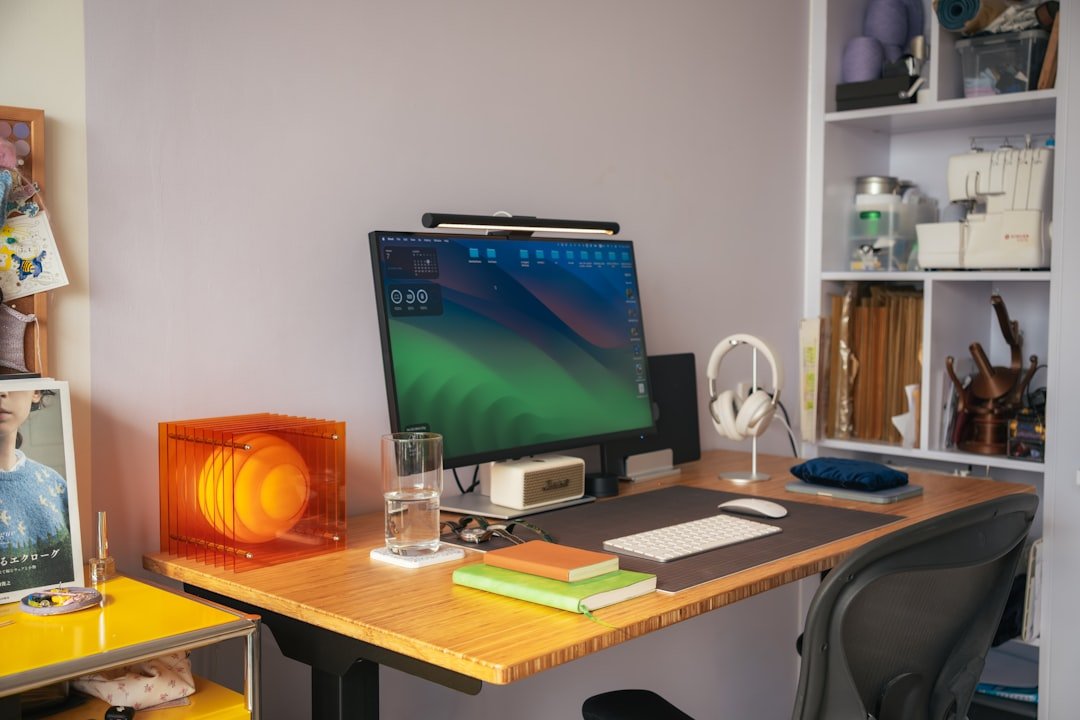
Monitor light bars clip onto the top of your screen and shine light down onto the desk while, in theory, keeping it off the display. The BenQ ScreenBar made the category popular, and there are now many cheaper versions. They are sold with “eye-care” language and promises of less strain during long evenings at the screen.
The idea behind them draws on reasonable principles. Glare on a screen and a bright display in a dark room are both widely thought to make screen work less comfortable, and a well-aimed lamp can help with both. What does not appear to exist is independent research on light bars themselves. So this is a case of plausible design logic, supported by general lighting guidance, without direct proof that the product reduces eye strain.
What eye strain actually is
“Digital eye strain”, also called computer vision syndrome, is a cluster of symptoms rather than one problem. A review in BMJ Open Ophthalmology describes two broad groups: symptoms linked to focusing and eye coordination, and external symptoms linked to dry eye.
That distinction matters for any gadget. Lighting can influence how comfortable the screen is to look at, through glare and contrast. It does little about dry eye, which is strongly tied to blinking less while concentrating on a screen, or about uncorrected vision problems.
What light bars claim to do
A light bar’s main selling point is its optics. BenQ says its asymmetric design lights the desk without reflecting off the screen, and quotes a lighting coverage of 60cm*30cm at 500 lux for the original ScreenBar. Some models add a rear-facing light to brighten the wall behind the monitor.
Those are manufacturer specifications. They describe what the product is designed to do, not whether it measurably reduces symptoms.
What the lighting evidence supports
Glare is a recognised problem. UK Health and Safety Executive guidance for screen users advises arranging the desk and screen to avoid glare, or bright reflections. The US Occupational Safety and Health Administration similarly recommends positioning task lighting, such as a desk lamp, so the light does not reflect on the screen. A light bar is one way to do that; a well-placed ordinary lamp is another.
This supports part of the principle behind light bars: keep light off the screen, and do not let the screen be the only bright thing in a dark room.
Where the evidence runs out
– No product trials. There do not appear to be independent, peer-reviewed trials testing whether monitor light bars reduce eye strain compared with other lighting. – Guidance, not product trials. The lighting advice above rests on glare and contrast principles, not long-term symptom trials of any specific product. – No comparison with alternatives. Nothing shows a light bar is better than a properly positioned desk lamp, adjusting screen brightness, or turning the room light on. – Other causes untouched. Lighting does not address reduced blinking, dry environments, long unbroken sessions or the need for glasses.
Practical takeaway
– Fix glare first. Check for reflections on your screen and move the screen, lamp or blinds before buying anything. – Do not work in the dark. Use some room or desk lighting so the screen is not the only bright thing in view, and turn screen brightness down in dim rooms. – If you buy a light bar, buy it for convenience. It is a tidy, space-saving way to light a desk without glare, which is a reasonable reason to own one. – Cover the basics. Take regular breaks from close screen work, and get an eye test if strain persists, since uncorrected vision is a common and fixable cause.
Common questions
Do monitor light bars reduce eye strain?
They may help indirectly by reducing glare and softening the contrast between a bright screen and a dark room, which lighting guidance supports. There do not appear to be independent trials showing that the bars themselves reduce eye strain.
Is it bad to use a computer in a dark room?
It is widely thought to be less comfortable, and balancing room and screen brightness so the screen is not the only bright thing in view is a reasonable step. There is no good evidence that it causes lasting eye damage.
Are monitor light bars better than desk lamps?
No evidence shows they are better. Their advantage is design: they save desk space and are built to keep light off the screen, but a desk lamp positioned so it does not reflect on the screen follows the same guidance.
Is the BenQ ScreenBar worth it?
It depends on what you want. As a neat, glare-free desk light it does what its specifications describe, but its eye-care claims are not backed by independent trials, and cheaper lighting changes may achieve similar comfort.
The bottom line
Monitor light bars are built on sensible lighting principles: keep light off the screen and do not stare at a bright display in a dark room. The products themselves have not been independently tested for eye strain. Sort out glare and room lighting first, take breaks and get your eyes tested, and treat a light bar as a tidy desk lamp rather than a medical device.
Did this answer your question?
Thanks. That helps us decide what to fix.


Leave a comment