

The link between how you sit and whether your back hurts is far weaker than the advice implies, and the review that established this has a funding source worth knowing about.
A causal assessment of 24 studies concluded that it failed to uncover high-quality studies to support any of the Bradford-Hill criteria for establishing causality between occupational sitting and low back pain, and that strong and consistent evidence did not support criteria for association, temporality or dose response. Its conclusion: it is unlikely that occupational sitting is independently causative of low back pain in the populations of workers studied.
That review was funded by a peer-review grant from the Workers’ Compensation Board of British Columbia. A 2021 meta-analysis, separately, did find cross-sectional associations between self-reported workplace sitting and both low back and neck or shoulder pain, while stating that reverse causality cannot be ruled out.
The causal review

The clearest single finding comes from Roffey and colleagues’ systematic review in The Spine Journal, which set out specifically to evaluate the causal relationship between occupational sitting and low back pain.
Bradford-Hill criteria are the standard framework epidemiologists use to judge whether an association is likely to be causal: consistency of association, temporality meaning cause precedes effect, dose response meaning more exposure produces more effect, and several others.
The review’s conclusion is unusually direct. It failed to uncover high-quality studies to support any of those criteria. Strong and consistent evidence did not support criteria for association, temporality and dose response. Based on those results, it is unlikely that occupational sitting is independently causative of low back pain in the populations of workers studied.
The abstract adds that the strength of evidence suggesting no association was consistent and rated as strong.
No dose response is the part worth pausing on. If sitting caused back pain, more sitting should generally mean more pain. The review found no support for that.
Who paid for it
Section 4 of this site’s standards requires disclosing funding that could bear on a finding, and this one qualifies.
The study was funded by a peer-review grant provided to four of its five authors by the Workers’ Compensation Board of British Columbia. A workers’ compensation board is the body that decides whether workplace exposures caused an injury and therefore whether claims are payable. A conclusion that occupational sitting is unlikely to be independently causative of back pain is, among other things, a finding with implications for that body’s liabilities.
That does not make the review wrong. It was peer-reviewed, published in a specialist journal, methodologically explicit, and part of a series by the same team covering lifting, bending, pushing, pulling and awkward postures. Peer-review grants are competitively awarded and the funder does not control conclusions.
It does mean a reader deciding how much weight to place on a strongly worded negative finding should know who commissioned it. The original version of this article did not carry that, which was an omission.
The review also drew a published letter to the editor in the same journal, titled to the effect that a lack of statistically significant association does not exclude causality.
What the umbrella review found

A systematic review of systematic reviews examined the relationship between specific physical exposures and low back pain, and whether previous reviews supported causality.
Its finding on this question: among the included reviews, consensus was found for the absence of an association between exposure to prolonged or occupational sitting and low back pain.
That paper is also candid that this area is disputed. It notes systematic reviews in this field have produced conflicting and at times controversial findings, that some support strong associations while others do not, and that the reviews finding no causal association received criticism for their scope, their methods, and their interpretation of both individual and collective findings.
So the no-association position is the consensus among the reviews examined, and it is a contested consensus.
The finding that complicates it

A 2021 systematic review with meta-analysis on sedentary behaviour and musculoskeletal pain found something different.
Pooling cross-sectional studies, it found associations between self-reported workplace sitting and low back pain, with an odds ratio of 1.47, and with neck or shoulder pain at 1.73, but not with pain in the extremities at 1.17.
It also found something pointing the other way in better-measured data: a probable negative prospective association of device-measured workplace sitting with low back pain intensity in tradespeople, which is to say more measured sitting went with less pain in that group.
And it found that experimental and intervention evidence indicated reduced low back pain, neck or shoulder pain and general musculoskeletal pain when workplace sitting was reduced.
Its own conclusion states the crucial limitation: the associations found are occupation dependent, and reverse causality bias cannot be ruled out. People whose backs hurt may sit differently, or choose sitting work, rather than sitting having caused the pain.
What this means for your back
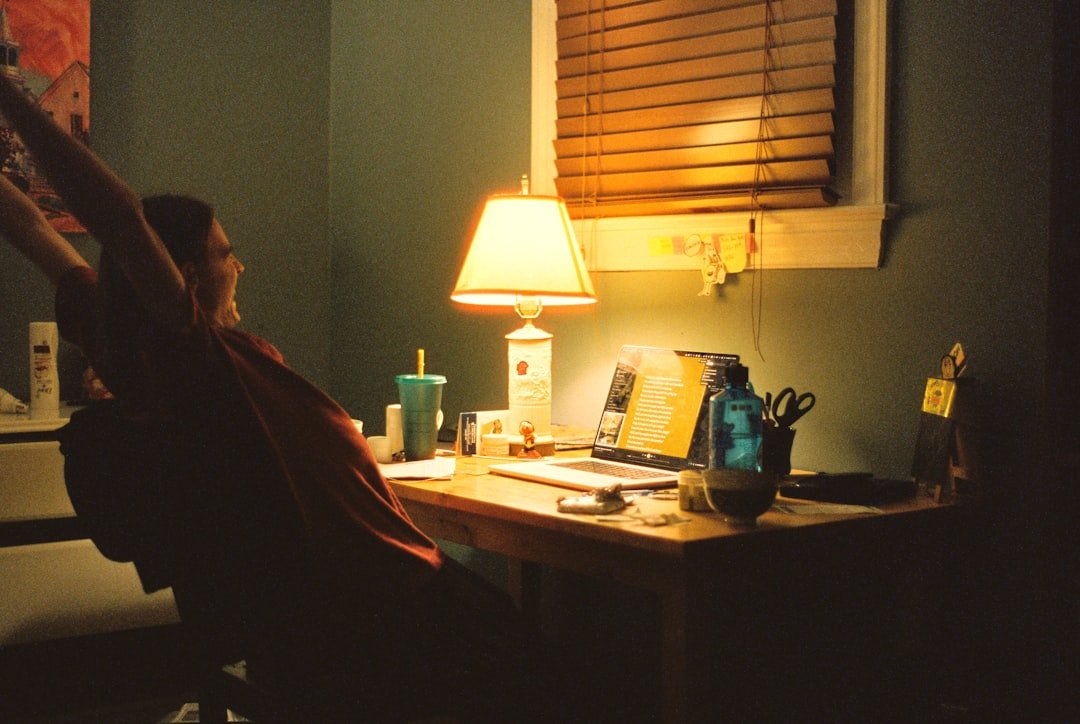
Back pain is real and common, and none of the above suggests otherwise. What is in question is a specific causal story about sitting and posture.
If your back hurts persistently, that is worth seeing a doctor or physiotherapist about, regardless of how you sit. If you have pain accompanied by numbness, weakness, pain radiating down a leg, loss of bladder or bowel control, or pain following an injury, see a doctor promptly rather than adjusting your chair.
This article prescribes no posture, no chair setting and no exercise, because no source here specifies one and the causal claim underlying such advice is what is in dispute. It is worth reading alongside whether an ergonomic chair helps, which examines the equipment question directly, and alongside standing desks and desk stretches, where the evidence is similarly thinner than the marketing.
Common questions
Does sitting badly cause back pain?
The causal evidence is weaker than the advice suggests. A systematic review specifically assessing causality concluded it failed to uncover high-quality studies to support any of the Bradford-Hill criteria for establishing causality between occupational sitting and low back pain, with strong and consistent evidence not supporting association, temporality or dose response. Its conclusion was that occupational sitting is unlikely to be independently causative. An umbrella review found consensus among reviews for the absence of an association. A 2021 meta-analysis did find cross-sectional associations, at an odds ratio of 1.47 for low back pain, while stating that reverse causality bias cannot be ruled out.
Who funded that research?
The causal review was funded by a peer-review grant provided to four of its five authors by the Workers’ Compensation Board of British Columbia. That is worth knowing because a compensation board decides whether workplace exposures caused injuries and therefore whether claims are payable, so a finding that sitting is unlikely to be causative has implications for its liabilities. The review was peer-reviewed, published in a specialist journal, and part of a series by the same team on lifting, bending, pushing, pulling and awkward postures. Peer-review grants are competitively awarded. But the funding is relevant context for a strongly worded negative finding, and it also drew a published letter to the editor arguing that a lack of statistically significant association does not exclude causality.
Why do the studies disagree?
Because they answer different questions with different measurements. Cross-sectional studies of self-reported sitting found associations with low back and neck or shoulder pain. The same 2021 meta-analysis reported a probable negative prospective association of device-measured workplace sitting with low back pain intensity in tradespeople, meaning more measured sitting went with less pain. Reviews assessing causality found no support for the Bradford-Hill criteria. The umbrella review also notes that reviews in this area have produced conflicting and at times controversial findings, and that the ones finding no causal association were criticised for their scope, methods and interpretation.
So does reducing sitting help?
That is a separate question from whether sitting caused the problem, and it has more supportive evidence. The 2021 meta-analysis reports that experimental and intervention evidence indicated reduced low back pain, neck or shoulder pain and general musculoskeletal pain when workplace sitting was reduced. That is worth knowing, and it does not establish the causal story, since an intervention can help for reasons other than removing a cause. This article prescribes nothing specific, because none of the sources specifies a protocol.
An instruction without a foundation
Almost everyone who works at a desk has been told how to sit. Feet flat, back straight, screen at eye level, some version of a diagram.
What is striking is not that the research contradicts that advice, but that the causal claim underneath it was never well established. A review built specifically to test causation could not find high-quality studies supporting any of the standard criteria for causality. An umbrella review found that to be the consensus among reviews, while noting the field is disputed and those reviews were criticised.
Meanwhile the strongest thing pointing the other way is a set of cross-sectional associations whose own authors say reverse causality cannot be ruled out.
That leaves an odd situation, and one worth holding with the funding in mind. Sit however is comfortable, change position when you want to, and take persistent pain to someone qualified. That is roughly what you would do without any of this research, which is the honest conclusion when a confident instruction turns out to rest on a contested foundation.
Did this answer your question?
Thanks. That helps us decide what to fix.



Leave a comment