
Probably not, if you are already drinking roughly to thirst. A meta-analysis of 33 studies puts the reliable cognitive impairment above about 2% of body mass lost as fluid, and below that line the pooled estimate is small with a confidence interval that touches zero. So the honest answer to “does drinking water help you focus” is that correcting a genuine deficit may make the hours feel less grim, mostly through mood and fatigue rather than accuracy, while topping up an already hydrated body has not been shown to sharpen anything.
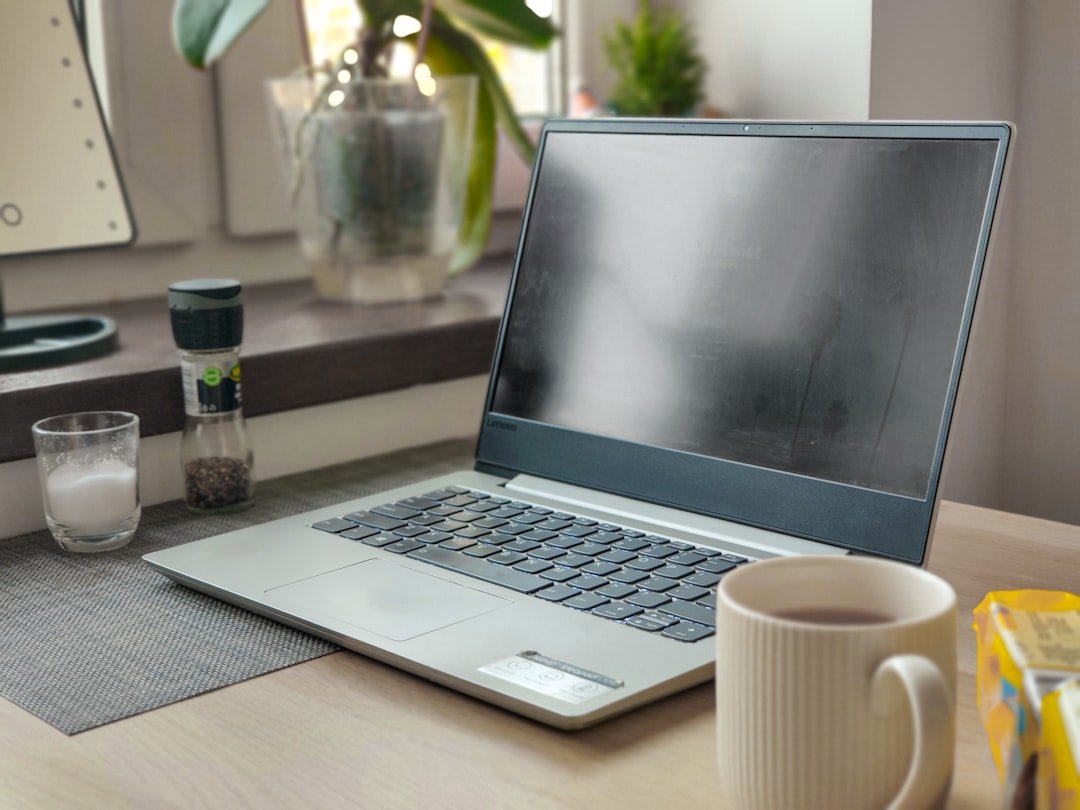
It is 4pm. Three review comments left, a headache building behind one eye, and a water bottle at the same level as at the 10am standup. Somewhere in your memory is a statistic about 2% dehydration destroying concentration, and it is easy to conclude you have been sabotaging yourself all day. The statistic exists. It just does not describe your afternoon, and the reason is buried in how the studies were run.
Nobody got dehydrated at a desk in these studies

Start with the study most often cited for the claim. In a randomised repeated-measures trial in 26 young men, researchers produced roughly 1.6% body-mass loss using three 40-minute treadmill walks in a 27.7C environment, with a 40 mg dose of the loop diuretic furosemide added in one of the three trial conditions. That is exercise in heat, in one arm helped along by a prescription drug that makes your kidneys dump fluid. It is a laboratory method for hitting a target deficit on schedule, not a model of forgetting to drink in air conditioning.
The results are narrower than the headline too. Errors on visual vigilance rose, visual working-memory response latency slowed, and fatigue and tension or anxiety went up. Two of six cognitive tasks moved. The abstract’s own wording is that dehydration degraded specific aspects of cognitive performance, not performance generally.
Once you know the protocol, most secondary coverage of this literature becomes hard to read. The exposure being tested is heat, exertion and a diuretic. The exposure being sold is a water bottle.
Does drinking water help you focus? The 2% line decides the answer
The pooled picture comes from a 2018 meta-analysis of 33 studies covering 280 effect-size estimates across 413 subjects, with dehydration ranging from 1% to 6% body-mass loss. Overall effect on cognitive performance: ES -0.21, 95% CI -0.31 to -0.11. Significant, and the authors’ own word for it is small. Attention took the biggest hit (ES -0.52, 95% CI -0.66 to -0.37), followed by motor coordination and executive function.
Now split it by severity, because this is the number that decides the article. Above 2% body-mass loss, ES -0.28 (95% CI -0.41 to -0.16). At or below 2%, ES -0.14 (95% CI -0.27 to 0.00). The upper bound of that second interval is zero. The authors’ conclusion is scoped to water deficits that exceed 2% body-mass loss.
Read that in both directions. It does not prove there is no effect below 2%; the pooled estimate is negative and the studies are heterogeneous (I-squared 37.6%, with wildly varying methods for inducing dehydration). It does mean the popular version, that 1 to 2% dehydration measurably wrecks your focus, is not what this analysis found. At that level the effect was small and could not be cleanly distinguished from nothing.
For scale, 2% of an 80 kg body is 1.6 kg of fluid (my arithmetic, not a figure from the paper). Reaching that seated in a temperate room, without illness, without a diuretic, with drinks in reach, takes real effort.
The men’s study and the women’s study do not say the same thing
The same lab ran a companion trial in 25 young women, dehydrated the same way, by intermittent moderate exercise with 40 mg of furosemide in one of the arms, reaching about 1.36% body-mass loss. It is routinely cited as proof that mild dehydration impairs cognition. It reports close to the opposite. In the authors’ words, “most aspects of cognitive performance were not affected by dehydration”. What did move was mood, perceived task difficulty, concentration as rated by the participants, and headache symptoms.
Same lab, different sexes, different outcome patterns. One found specific cognitive slips. One found that people felt worse while their scores largely held. Secondary coverage blends them into a single tidy finding, which is how a null result on cognition gets laundered into a claim about cognition. Worth noting once: Danone Research co-authors are listed on both papers.
My own reading, not a stated finding: at mild deficits the most consistent signal in this literature is subjective, not objective. Underdrinking looks less like getting dumber and more like the work feeling worse. For anyone who spends six hours a day in a diff, that is not a trivial distinction. It is just not the one being sold.
There is no correct number of glasses, and the bodies that set the numbers say so
The Institute of Medicine’s 2005 Dietary Reference Intakes set adequate intake for total water at about 3.7 L/day for men and 2.7 L/day for women. Total water means every beverage plus the water in food, and by the panel’s own accounting roughly 20% of the total arrives via food (the derivation sits in the open-access water chapter). Anyone presenting 3.7 L as a drinking-water target has misread the source. The report also declined to give a glasses-per-day rule at all, saying most healthy people meet their needs by letting thirst be their guide.
Then EFSA. Its 2010 opinion sets total water adequate intakes at 2.5 L/day for men and 2.0 L/day for women, applying only to moderate temperature and moderate physical activity (full text). Two serious expert bodies, one question, a gap of more than a litre for men. That disagreement is the clearest available evidence that no single correct daily number exists.
As for eight glasses: a 2002 review went looking for the origin and evidence base of “drink at least eight 8-oz glasses of water a day” and found no scientific studies supporting it, concluding from surveys of food and fluid intake in thousands of healthy adults that such large amounts are probably not needed. Valtin scoped that to healthy adults in a temperate climate leading a largely sedentary existence, which describes this audience almost exactly, and noted that proving a negative is difficult or impossible, inviting readers to send him any supporting publications. That posture is more useful than declaring the rule debunked.
Does coffee count toward your fluid intake?

In a counterbalanced cross-over study of 50 habitual male coffee drinkers, three days of 4×200 mL of coffee (4 mg/kg caffeine) produced no significant difference from an equivalent water condition in total body water, 24-hour urine volume, urine specific gravity, urine osmolality, creatinine, or any haematological hydration marker. Sodium excretion was higher in the coffee condition.
Scope it properly. Fifty men, all habitual drinkers at three to six cups a day, controlled diet and activity, and industry ties disclosed in the competing-interests statement. It does not license “coffee hydrates you as well as water” for someone who rarely drinks it or who is running six espressos deep. Within its scope it says moderate daily coffee is not draining you dry. When to stop drinking it is a separate question, covered in our piece on how long before bed to stop drinking coffee.
Where to take this, and when to stop guessing
Thirst is the mechanism the IOM explicitly endorsed, and it is cheaper than a tracking app. Drink when you are thirsty and keep something drinkable in reach. Do not set a volume target to hit regardless of thirst. Forcing fluids well past need can cause hyponatraemia, which is genuinely dangerous. If you have kidney disease or heart failure, or you take diuretics, lithium, SSRIs or desmopressin, your fluid intake is a clinical question and belongs with your clinician rather than with any article.
Plainly and without alarm: recurrent headaches, persistent fog, thirst that feels excessive, or unusual urine output are reasons to see a doctor, not reasons to buy a bigger bottle. Genuinely excessive thirst can be a sign of diabetes. Dehydration is a convenient explanation for a bad afternoon, and convenient explanations are the ones that delay real diagnoses.
Common questions
How much water should I drink per day at a desk job?
No authority gives a defensible per-day drinking figure for an individual. The IOM’s 2005 adequate intakes of about 3.7 L/day (men) and 2.7 L/day (women), and EFSA’s 2010 values of 2.5 L/day and 2.0 L/day, are all total water including food and every beverage, with roughly a fifth of the IOM total coming from food. The IOM declined to publish a glasses-per-day rule and said most healthy people meet their needs by following thirst.
Will drinking more water improve my concentration if I am already hydrated?
There is no evidence in the dehydration-and-cognition literature that it will. Those studies dehydrate people deliberately, usually by exercise in heat or with a diuretic; none tested whether extra water improves cognition in someone already adequately hydrated. Correcting a deficit and over-topping a normal state are different questions, and only the first has been studied.
Is it true that 1 to 2% dehydration impairs cognitive performance?
That framing overstates the evidence. A 2018 meta-analysis of 33 studies found the impairment concentrated above 2% body-mass loss (ES -0.28, 95% CI -0.41 to -0.16), while at or below 2% the pooled effect was small with a confidence interval reaching zero (ES -0.14, 95% CI -0.27 to 0.00). That is not a demonstrated absence of any effect, but it is not the confident impairment the claim implies either.
Does coffee dehydrate you?
Not at moderate intake in habitual drinkers. In a cross-over study of 50 male coffee drinkers, three days of four 200 mL coffees a day (4 mg/kg caffeine) showed no significant difference from an equal volume of water across total body water, urine volume, urine osmolality and other hydration markers. The sample was men only, all habituated at three to six cups a day, so it does not extend to occasional drinkers or very high doses.
Where did the eight glasses of water a day rule come from?
A 2002 review in the American Journal of Physiology searched for its origin and evidence base and found no scientific studies supporting it, concluding from intake surveys in thousands of healthy adults that such large amounts are not needed for healthy, sedentary adults in temperate climates. The author noted that proving a negative is difficult or impossible.
The useful move is not to drink more. It is to stop treating hydration as a performance lever and start treating it as a comfort variable, because that is the only thing the mild-deficit data supports with any consistency. If your 4pm is foggy, water is a cheap thing to rule out and a poor thing to blame. Where I would look next, and this is my judgement rather than anything in the studies above, is sleep, workload and how often something interrupts you. The chair is worth a look too, and we have covered that separately in how often you should get up from sitting. Rule out the cheap one, then go look at those.
Did this answer your question?
Thanks. That helps us decide what to fix.


Leave a comment