

Partly, and less than the ledger metaphor suggests. In Belenky’s laboratory dose-response study, three recovery nights at 8 hours in bed left psychomotor vigilance in the restricted groups at its reduced level, and in Depner’s randomised study, ad-libitum weekend recovery sleep failed to prevent the metabolic changes that came with a repeating restriction cycle. In a 43,880-person Swedish cohort followed for 13 years, though, people who slept short on weekdays and long at weekends had a mortality rate no different from consistent 6 to 7 hour sleepers, so whether you can catch up on sleep on weekends depends on which question you are asking.
Picture the pattern the question usually comes from. Five or six hours a night through a launch week, then a ten-hour Saturday that feels like a repair. Monday you read the same forty lines of a review four times and the diff has not changed. The obvious explanation is that you did not catch up enough. The literature offers a more uncomfortable one.
Why the answer to “can you catch up on sleep on weekends” depends on what you measure

Two bodies of evidence bear on this and they are almost never presented together, because each on its own makes a cleaner headline. The lab studies take sleep away from a small number of people on a schedule and measure markers over days. The cohort studies ask tens of thousands how they sleep and count who dies over the next decade. One measures mechanism on a short clock, the other outcome on a long one, and neither is equipped to answer the other’s question.
One vocabulary note. “Sleep debt” implies a balance you could query and a payment that clears it, and no study below measures anything like that. Van Dongen’s framing is closer to excess wakefulness carrying a neurobiological cost that accumulates.
The laboratory answer: recovery is slower than the metaphor
Belenky and colleagues ran a sleep dose-response study in 66 volunteers: 3, 5, 7 or 9 hours in bed for seven days, then three recovery nights at 8 hours in bed. Psychomotor vigilance speed in the 7-hour and 5-hour groups stayed at its reduced level through recovery with no evidence of improvement, and lapses in the 5-hour group did the same. The 3-hour group improved fast but incompletely, settling roughly where the 5- and 7-hour groups had ended up.
The popular version of that result is wrong. It is not evidence that sleep loss is permanent. It is evidence that one recovery dose, three nights at 8 hours in bed, did not undo a week of restriction inside that window. The authors’ own reading is that the brain adapts to chronic restriction and those adaptations persist for several days after normal sleep resumes, delaying recovery rather than preventing it. Anyone telling you the loss is permanent is quoting a study that ran the clock for three nights.
Depner’s group tested something closer to what you actually did. In a randomised study of 36 healthy young adults, a weekend-recovery group got ad-libitum weekend sleep inside a repeating pattern of insufficient sleep. The weekend bought them about 1.1 hours of cumulative sleep over baseline, less than most people assume a lie-in delivers. During the return to insufficient sleep, whole-body, hepatic and muscle insulin sensitivity fell by roughly 9 to 27 percent, circadian phase was delayed, and after-dinner energy intake and body weight rose versus baseline. The authors concluded that weekend recovery sleep is not an effective strategy for preventing the metabolic dysregulation associated with recurrent insufficient sleep.
Keep the limits attached to that number. The groups were small (control 8, restriction 14, weekend recovery 14) and the outcomes were short-term markers across a single simulated cycle, not disease: a fall in insulin sensitivity is not diabetes. There was also a sex difference, with weekend sleep duration lower in women and energy intake returning to baseline levels in women but not men. The senior author’s disclosure statement lists multiple industry relationships.
The epidemiological answer: a large null result

Akerstedt and colleagues followed 43,880 Swedish adults for 13 years, asking about weekday and weekend sleep separately. Among people under 65, those who slept short on weekdays but long at weekends had a mortality rate no different from the reference group of consistent 6 to 7 hour sleepers. Consistently sleeping five hours or less did carry a higher rate (HR 1.65, 95% CI 1.22 to 2.23). In those aged 65 and over, no association appeared at all.
A null result is not a benefit. Sleep was self-reported once at baseline and the study is observational, so it cannot establish that catching up caused anything, and people who sleep five hours or less every night differ from everyone else in ways a single questionnaire cannot separate from the sleep. The correct reading is narrow. Over 13 years, in this cohort, the short-weekday-long-weekend pattern was not detectably worse than consistent adequate sleep. That is reassuring next to the lab results and nothing like proof that the lie-in is working.
My own reading, labelled as reasoning rather than evidence: the two literatures are compatible. A mechanism can be real and measurable in a lab over days and weeks while being too small or too confounded to surface as a mortality signal in questionnaire data over 13 years. The baseline underneath both is unchanged, and the AASM and Sleep Research Society joint consensus puts it at 7 or more hours a night on a regular basis.
The finding you will recognise from a release week

The result most worth your attention is not about recovery at all. Van Dongen and colleagues restricted 48 healthy adults to 4 or 6 hours in bed for 14 consecutive nights in a laboratory dose-response experiment. Deficits accumulated across all cognitive tasks in a dose-dependent way, and the authors concluded that chronic restriction to 6 hours or less produced deficits equivalent to up to two nights of total sleep deprivation. Then this.
“Sleepiness ratings suggest that subjects were largely unaware of these increasing cognitive deficits.”
That is the authors’ own sentence, from the paper. Stated precisely: subjective sleepiness ratings did not track the objective decline. Not that you can never tell how impaired you are, a bigger claim than one lab study licenses, but that here self-report and performance data came apart. If you have ever finished a restricted week feeling basically fine and then found your Thursday review comments were nonsense, this is the shape of it: an instrumentation problem, not a discipline problem. It is also why “I slept ten hours, I should be fine” is a weak inference.
What the watch on your wrist can and cannot settle
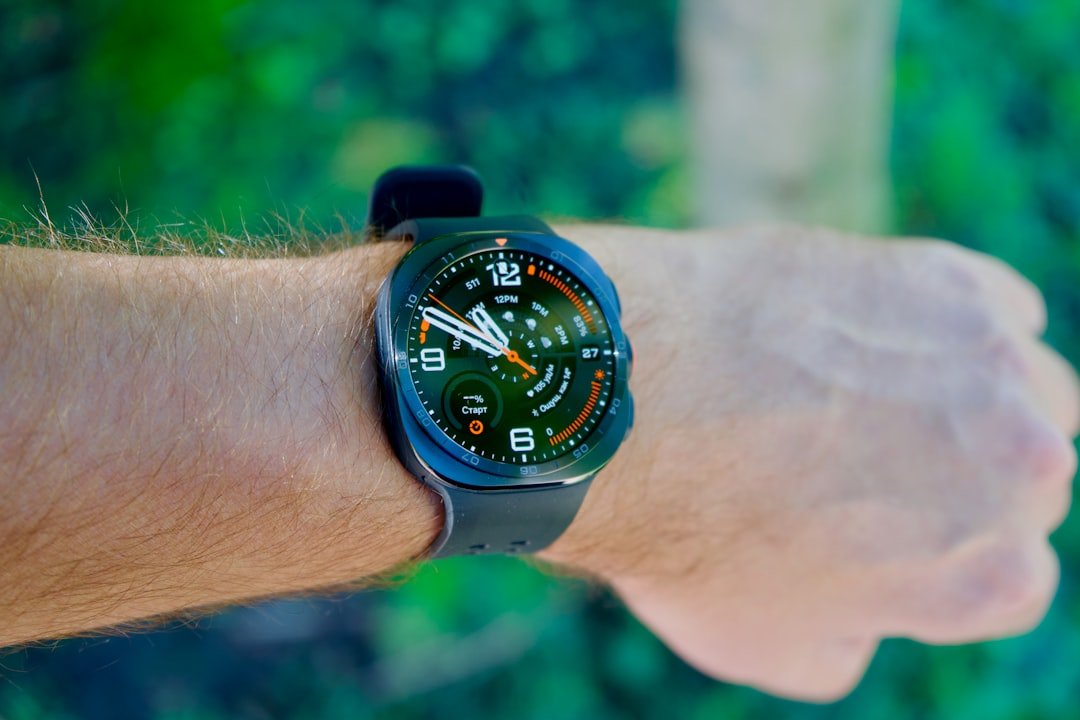
You will want to settle this with data you already have. In a laboratory comparison of seven consumer sleep-tracking devices against polysomnography in 34 healthy young adults over three nights, epoch-by-epoch sensitivity for detecting sleep was high across the board (all 0.93 or above), but specificity for detecting wake was low to medium (0.18 to 0.54). Staging was inconsistent, and devices tended to do worse on nights with poorer or disrupted sleep. The hardware tested was 2017 to 2020 models, so this is not a verdict on a current watch.
So: reasonable at separating sleep from wake, unreliable at staging, worst on exactly the disrupted nights you most want explained. Proprietary “recovery” and “readiness” scores were not evaluated at all, by that study or any other cited here. Those are composites whose weighting is unpublished, and treating one as a measurement of your restriction load is an assumption, not a reading. The AASM position statement on consumer sleep technology states that these devices lack validation against gold-standard polysomnography and cannot be used to diagnose or treat sleep disorders, and that they belong alongside a proper clinical evaluation rather than in place of one.
If your sleep is persistently unrefreshing, if you snore loudly with witnessed pauses in breathing, if insomnia has run for months, or if you have fallen asleep at the wheel, that belongs with a doctor or a sleep clinic, not with a tracker and not with an article. Nothing here is medical advice, and our medical disclaimer says so at greater length.
Common questions
Does a weekend lie-in make Monday worse?
Depner’s randomised study of 36 healthy young adults found that a weekend-recovery group had delayed circadian phase and did not avoid the fall in insulin sensitivity seen during the return to insufficient sleep, so weekend recovery sleep did not prevent metabolic dysregulation in that design. It measured short-term markers over a single simulated cycle in small groups, and no source here shows that this pattern causes any clinical outcome.
Is sleeping in at the weekend linked to dying earlier?
In a Swedish cohort of 43,880 adults followed 13 years, under-65s who slept short on weekdays and long at weekends had a mortality rate that did not differ from consistent 6 to 7 hour sleepers, while consistently sleeping 5 hours or less carried a higher rate (HR 1.65, 95% CI 1.22 to 2.23). Sleep was self-reported once at baseline and the study is observational, so this is a null result rather than evidence that catching up protects you.
Why do I feel fine after a short-sleep week and still make bad calls?
In Van Dongen’s 2003 experiment restricting 48 adults to 4 or 6 hours in bed for 14 nights, cognitive deficits accumulated in a dose-dependent way while, in the authors’ words, sleepiness ratings suggested subjects were largely unaware of them. Read that as one laboratory study showing subjective ratings and objective performance coming apart, not as a general rule that self-assessment is always wrong.
Can my sleep tracker tell me how much sleep I need to catch up?
No evidence supports using it that way. A laboratory comparison of seven consumer devices against polysomnography (34 adults, three nights, 2017 to 2020 models) found high sensitivity for detecting sleep but low to medium specificity for wake and inconsistent staging, and proprietary recovery or readiness scores were not evaluated at all. The American Academy of Sleep Medicine’s position statement on consumer sleep technology adds that such devices lack validation against gold-standard polysomnography and cannot be used to diagnose or treat sleep disorders.
The better question
“Can I catch up?” treats the weekend as a settlement mechanism, and none of this evidence describes one. What it describes is a load that builds faster than it clears and a self-report channel that went quiet while the performance data did not. My reading of that, again as reasoning rather than evidence, is that it moves where the leverage sits. Not the Saturday lie-in, which bought Depner’s subjects about 1.1 hours over baseline, but whether a launch week run at five or six hours a night counts as a normal cost of shipping on your team. That is a scheduling question long before it is a health one, and it is the variable anyone can actually move.
Two adjacent questions, deliberately kept separate: what is shortening the nights, in how long before bed to stop drinking coffee, and how a sedentary day compounds, in how often you should get up from sitting.
Did this answer your question?
Thanks. That helps us decide what to fix.


Leave a comment