

One well-known trial found a large effect, it was small, it tested dietary support added to treatment rather than instead of it, and it later drew a published critique in the same journal.
The SMILES trial randomised 67 adults with moderate to severe depression to either dietitian-led dietary support or a social support control, both for 12 weeks. The dietary group improved significantly more on a standard depression rating scale, with a Cohen’s d of minus 1.16, and remission was achieved by 32.3 per cent against 8 per cent of controls.
In 2018 the same journal published a paper asking whether undisclosed recruitment practices explain the remarkably large effect. That exchange is part of the record and the original version of this article missed it.
If you are currently depressed, the section on what this was actually testing matters more than the effect size, so it comes early.
What the trial did
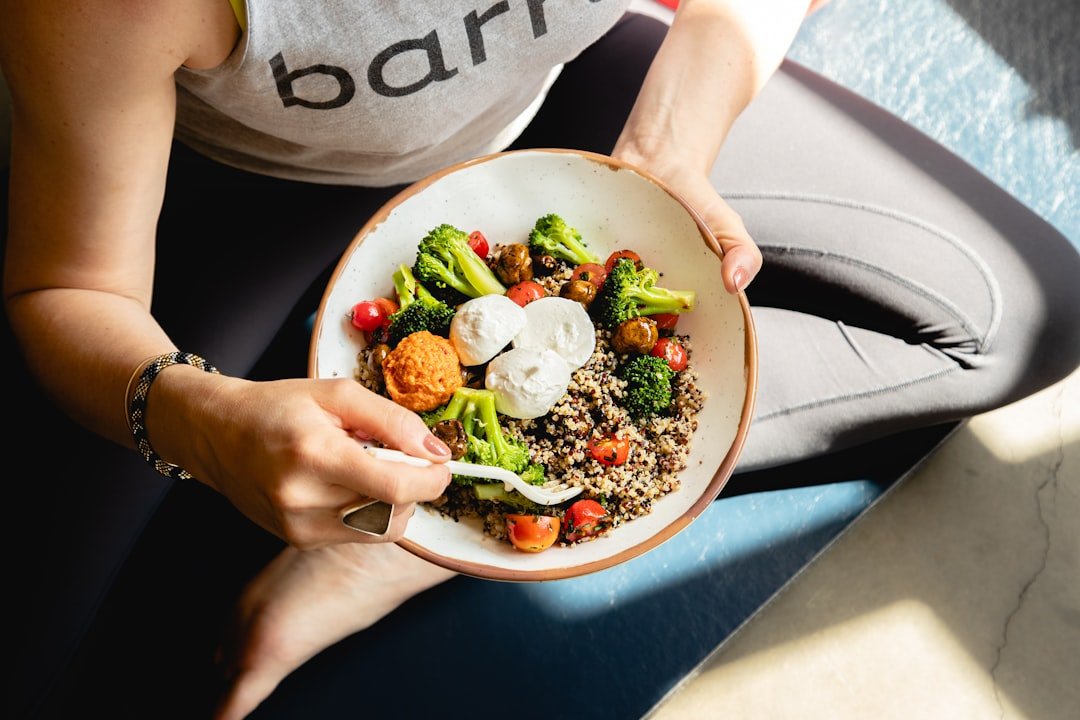
The SMILES trial, published in BMC Medicine in 2017 by Jacka and colleagues, described itself as a 12-week, parallel-group, single-blind randomised controlled trial of an adjunctive dietary intervention in the treatment of moderate to severe depression.
Adjunctive is the load-bearing word. This was an addition to existing care, not a replacement.
The intervention was seven individual nutritional consulting sessions delivered by a clinical dietitian. The control was a social support protocol matched to the same visit schedule and length, which is a stronger comparator than doing nothing.
Depression symptomatology was the primary endpoint, measured on the Montgomery-Asberg Depression Rating Scale at 12 weeks, with remission, symptom change, mood and anxiety as secondary outcomes. Analyses used a mixed-effects model repeated measures approach, with robustness investigated through sensitivity analyses.
What it found

Of 166 individuals assessed, 67 were randomised, 33 to the diet intervention and 34 to control. Complete data at 12 weeks was available for 31 in the diet group and 25 in the control group.
The dietary support group showed significantly greater improvement between baseline and 12 weeks, with t of 4.38, p below 0.001, and a Cohen’s d of minus 1.16 with a confidence interval from minus 1.73 to minus 0.59.
Remission, defined as a score below 10, was achieved by 32.3 per cent of the intervention group and 8 per cent of controls, a statistically significant difference. Based on those remission data, the number needed to treat is 4.1, with a confidence interval from 2.3 to 27.8.
A number needed to treat of 4.1 sounds strong. Its confidence interval reaching 27.8 is the more honest summary: the data are consistent with anywhere between one in four and one in twenty-eight people benefiting.
That is a large effect size from 56 people with complete data, which is small for depression research.
The published critique

Two years later, BMC Medicine published a paper by Molendijk, Fried and Van der Does titled to ask whether undisclosed recruitment practices explain the remarkably large effect of the SMILES trial.
The trial’s authors published a reply in the same issue, titled to describe SMILES as an important first step, and declaring no competing interests.
We are reporting the existence and titles of that exchange rather than adjudicating it, because we were not able to retrieve the substance of either paper. What the titles establish is that the trial’s effect size was formally questioned in the peer-reviewed literature, on grounds concerning how participants were recruited, and that its authors responded.
That is not something you would learn from the hundreds of articles citing SMILES as settled, and it changes how much weight the finding should carry. Treat the numbers above as the trial’s reported results rather than as an undisputed effect.
The context most coverage leaves out

Most participants were already receiving treatment. Of the 67 enrolled, 55 were using some form of therapy: 21 combining psychotherapy and pharmacotherapy, 9 using psychotherapy alone, and 25 using only pharmacotherapy.
So the finding is that adding dietitian-led dietary support to existing treatment outperformed adding matched social support. It is not a finding that diet works instead of treatment.
A 2019 meta-analysis of dietary improvement and depression and anxiety symptoms adds a constraint: a key issue in clinical applicability is the lack of studies in clinically depressed samples, meaning most evidence of dietary interventions reducing depressive symptoms applies only to nonclinical depression to date.
The same paper notes SMILES was the first to examine dietary interventions in a clinically depressed sample, and that another trial indicating benefit had to be excluded from the meta-analysis because its intervention also included fish oil, making it impossible to determine whether reductions came from dietary change or the supplement.
What this means and does not mean

It means dietary support delivered by a clinical dietitian, alongside existing treatment, produced a measurable benefit in one trial whose effect size was subsequently questioned.
It does not mean eating better treats depression on its own. The design compared adjunctive interventions in a population mostly receiving therapy or medication.
It does not mean the intervention was a diet plan you could follow from an article. It was seven individual consulting sessions with a clinical dietitian, and the delivery is part of what was tested.
And it does not extend to non-clinical low mood, where the meta-analysis says most existing evidence actually sits. That is a similar shape to exercise as a treatment for depression, where the evidence base is far larger and the authors’ own confidence ratings are low.
If this is about you
Depression is a treatable medical condition and decisions about how to treat it are clinical ones.
If you are experiencing persistent low mood, loss of interest, changes in sleep or appetite, or difficulty functioning, see a doctor. If you are having thoughts of harming yourself, contact your doctor, a crisis line or emergency services now.
If you are already in treatment and this research interests you, the appropriate step is to ask the person managing your care about a referral to a dietitian, not to change anything on your own. That is what the trial actually tested.
And a caution specific to this topic: framing food as a treatment can become rigid or anxious for some people. If your relationship with eating is already difficult, this is a conversation to have with a clinician rather than a project to start alone, and the same applies to eating late and to supplement questions like vitamin D and fatigue.
Common questions
Does eating better treat depression?
One trial found dietary support helped when added to existing treatment, and its effect size was later questioned. The SMILES trial randomised 67 adults with moderate to severe depression to 12 weeks of dietitian-led dietary support or a matched social support control, describing itself as testing an adjunctive intervention. The dietary group improved significantly more, with a Cohen’s d of minus 1.16, and 32.3 per cent achieved remission against 8 per cent of controls, giving a number needed to treat of 4.1 with a confidence interval reaching 27.8. Note that 55 of the 67 participants were already using psychotherapy, medication or both, and that BMC Medicine later published a paper questioning whether undisclosed recruitment practices explain the effect.
Has the trial been challenged?
Yes, in the journal that published it. In 2018 BMC Medicine published a paper by Molendijk, Fried and Van der Does asking whether undisclosed recruitment practices explain the remarkably large effect of the SMILES trial. The trial’s authors published a reply in the same issue describing SMILES as an important first step, and declaring no competing interests. This article reports the existence and titles of that exchange rather than adjudicating it, because the substance of neither paper could be retrieved. What it establishes is that the effect size was formally questioned on grounds concerning recruitment, which is worth knowing before treating the finding as settled.
Could I just follow the diet myself?
The intervention was not a diet you follow from a document. It consisted of seven individual nutritional consulting sessions delivered by a clinical dietitian, compared against a social support protocol matched to the same visit schedule and length. The delivery, the individual consultations and the professional support are part of what was tested, and the control was designed specifically to account for the effect of regular supportive contact. If this research interests you and you are in treatment, asking the person managing your care about a dietitian referral is closer to what was studied than making changes alone.
Is this a reason to change my treatment?
No. The trial tested an adjunctive intervention in participants who were mostly already receiving psychotherapy, pharmacotherapy or both, and it was not designed to compare diet against those treatments. Decisions about starting, stopping or changing treatment for depression are clinical decisions. If you are unwell, see a doctor. If you are already in care, this is something to raise with them rather than act on independently. If you are having thoughts of harming yourself, contact your doctor, a crisis line or emergency services now.
A good trial, precisely bounded
What makes SMILES worth writing about is that it is a real randomised trial with a control designed to be hard to beat, in a field where most claims about food and mood rest on observational data.
What makes it easy to misuse is that everything about how it is usually described drops the boundaries. Adjunctive becomes alternative. Seven dietitian sessions become a list of foods. Sixty-seven participants become a settled finding. The number needed to treat gets quoted as 4.1 without the interval reaching 27.8. And the published paper questioning whether recruitment explains the effect rarely appears at all.
Inside those boundaries, the finding is genuinely useful: adding structured dietary support to existing treatment produced a large improvement in one trial, with remission rates four times the control group’s, subsequently contested.
Outside them, it becomes the suggestion that a person with major depression could eat their way out of it, which is not what was tested and is the kind of claim that makes unwell people feel they are failing at something simple.
Did this answer your question?
Thanks. That helps us decide what to fix.



Leave a comment