
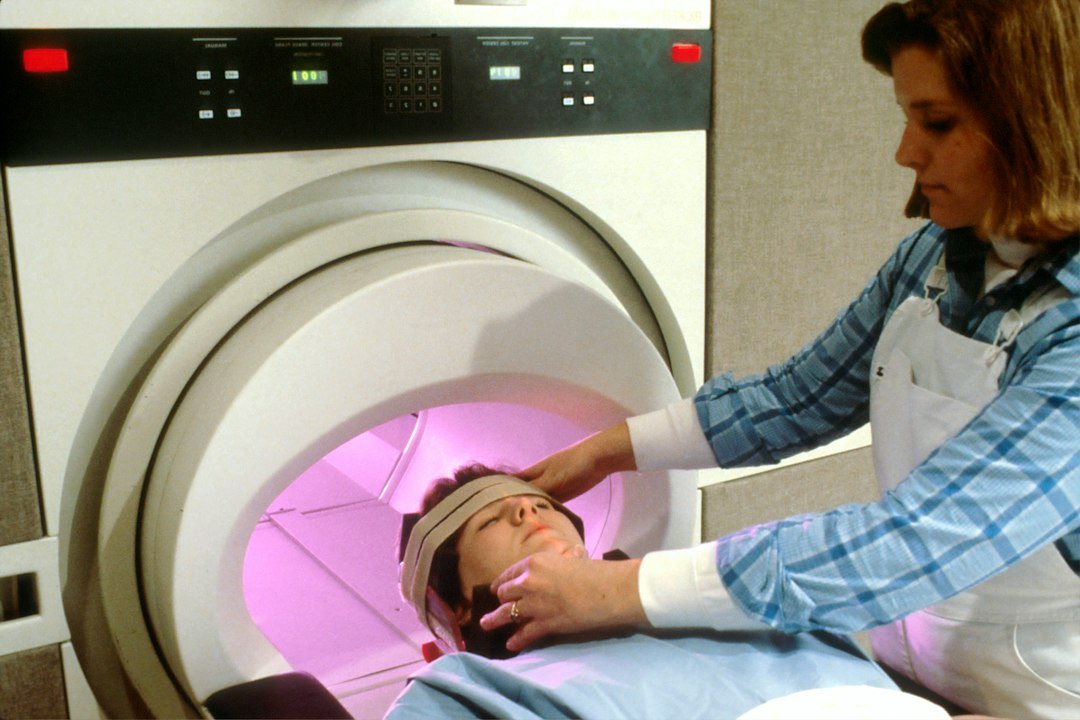
Full-body MRI screening has become a status purchase, marketed with the logic of “catch it early” and endorsed by celebrities and podcast hosts. For roughly two thousand dollars you get a scan of most of your body and a report of everything found in it.
The appeal is obvious and the evidence is thin in a specific way: the scans find things, reliably, and nobody has shown that finding them makes healthy people live longer. This piece explains what the screening literature actually contains.
What is being sold
Consumer whole-body MRI services scan the head, spine, chest, abdomen and pelvis without contrast, looking for tumours, aneurysms and other structural abnormalities. Prices sit in the low thousands: one write-up notes US-based Ezra offers a full-body MRI scan for $1,950, while Prenuvo offers a similar package for a whopping $2,499. It is rarely covered by insurance.
MRI does not use ionising radiation, so the physical risk of the scan itself is minimal. The risks in screening are downstream.
What the scans find
This is the best-quantified part. A systematic review pooled whole-body MRI results in asymptomatic adults, covering twelve studies, comprising 5373 asymptomatic subjects. Its central number: pooled prevalences of critical and indeterminate incidental findings together were 32.1%.
Roughly one in three healthy people scanned had something flagged that needed thought, and the review divided that roughly evenly between critical and indeterminate findings. It also estimated the error rate: six studies suggested a pooled proportion of false-positive findings of 16.0%.
Its conclusion is measured and damning in equal parts: the prevalence of critical and indeterminate incidental findings in asymptomatic subjects is substantial, verification data are lacking, and the proportion of false-positive findings appears to be substantial.
A separate BMJ meta-analysis of 32 studies with 27,643 participants approached it differently, restricting to findings judged potentially serious, and found a pooled prevalence of 3.9% on brain and body MRI. The difference between 32% and 3.9% is a difference in what counts as a finding, not a contradiction. Most of what a scan turns up is ambiguous rather than serious.
What happens next
An incidental finding is not an answer; it is the start of a process. Follow-up scans, specialist referrals, sometimes biopsies. In radiologist-led programmes the cancer yield is low, a small single-digit percentage of asymptomatic individuals, while a far larger share come away with an incidental finding of some kind.
So for every hundred healthy people scanned, one or two have a cancer detected, and a much larger number receive news requiring investigation, most of which turns out to be nothing. Whether the one or two detections translate into longer life is the question the industry cannot yet answer, because that requires long-term outcome data that does not exist for this population.
The professional bodies reflect that. As one summary of the American College of Radiology’s position puts it, for people without symptoms or high-risk conditions there is not enough evidence to recommend it and no documented proof that it prolongs life or is cost-effective. Whole-body MRI has not been endorsed by the guideline bodies that back mammography, colonoscopy and low-dose CT, all of which earned that endorsement through mortality data.
The harms that are easy to miss
Financial: the scan is the small cost. Downstream investigation is the large one, and it is often not covered.
Psychological: living with an “indeterminate” finding for months while it is monitored has a real cost, and researchers have begun studying the emotional impact of abnormal findings in screening.
Overdiagnosis: this is the subtle one. Some detected abnormalities would never have caused symptoms in your lifetime, and treating them converts a healthy person into a patient without benefit. That is not hypothetical; it is the central lesson of several screening programmes that looked obviously beneficial before they were tested.
Who it may be right for
Whole-body MRI has a legitimate clinical role in people with specific inherited cancer syndromes, where surveillance is protocol-driven and the pre-test probability is high. That is a clinical decision made with a specialist, not a consumer purchase.
For an asymptomatic person of average risk, the screening interventions with mortality evidence behind them are boring and mostly free at the point of use: blood pressure, the cancer screening programmes you are eligible for, lipids, and not smoking. Those are where the demonstrated life extension is.
This is not individual medical advice. Whether any screening test is appropriate for you depends on your personal and family history and belongs with a clinician.
Common questions
Is a full-body MRI worth it?
For asymptomatic average-risk adults, there is no evidence it prolongs life or is cost-effective, and roughly a third of scans produce critical or indeterminate incidental findings that require follow-up.
How often do full-body MRIs find cancer?
In radiologist-led programmes, cancer is detected in only a small single-digit percentage of asymptomatic people scanned, against a far larger rate of incidental findings.
What is the problem with incidental findings?
They are mostly ambiguous rather than serious, and pooled data put false positives at about 16%. Each one can trigger further scans, referrals or biopsies, with cost, anxiety and procedural risk attached.
Is full-body MRI dangerous?
The scan itself uses no ionising radiation and is physically low-risk. The risks are downstream: false positives, overdiagnosis, unnecessary procedures and the psychological burden of uncertain results.
The bottom line
A full-body MRI will almost certainly find something, is unlikely to find a cancer, and has never been shown to help healthy people live longer. If you have an inherited high-risk condition, talk to a specialist. If you do not, the two thousand dollars buys more health as a gym membership and a blood pressure check.
Did this answer your question?
Thanks. That helps us decide what to fix.



Leave a comment