
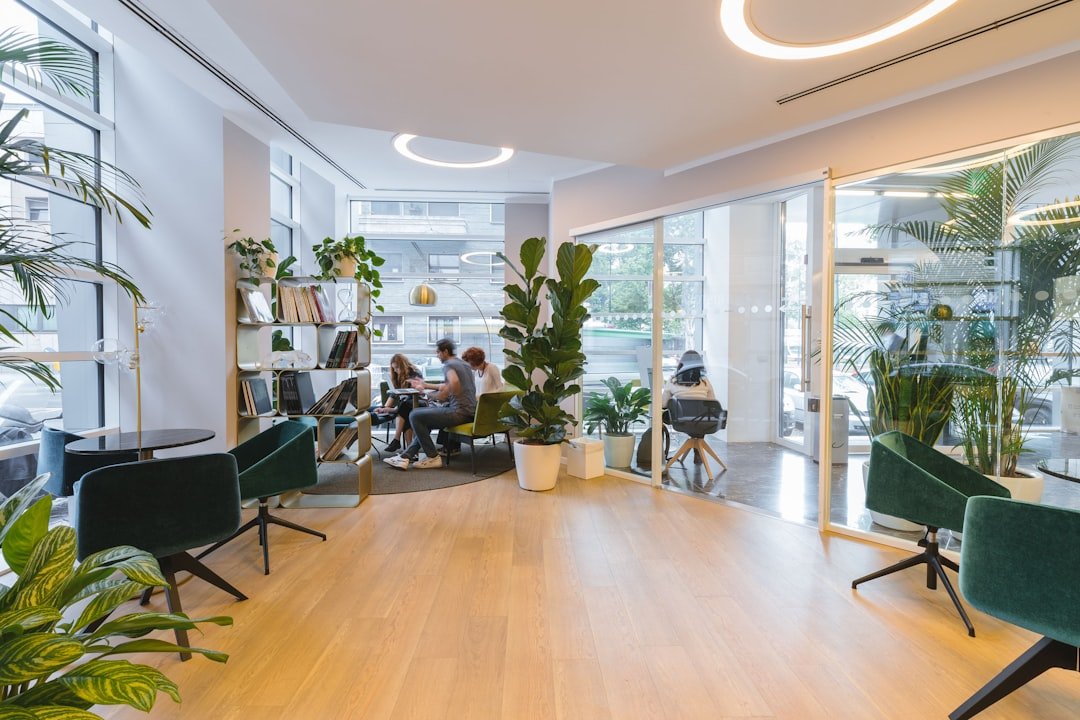
The evidence splits along a line most coverage misses. A study of office workers given optimised daylight reported they slept 37 minutes longer and scored 42 per cent higher on a decision-making simulation. Two separate studies varying artificial light brightness found no statistically significant differences in subjective alertness, one of them noting that research results in this area are far from consistent.
So whether office lighting affects alertness appears to depend on whether you are changing the brightness of a lamp or changing your whole daily light exposure, and those are not the same intervention.
The daylight study
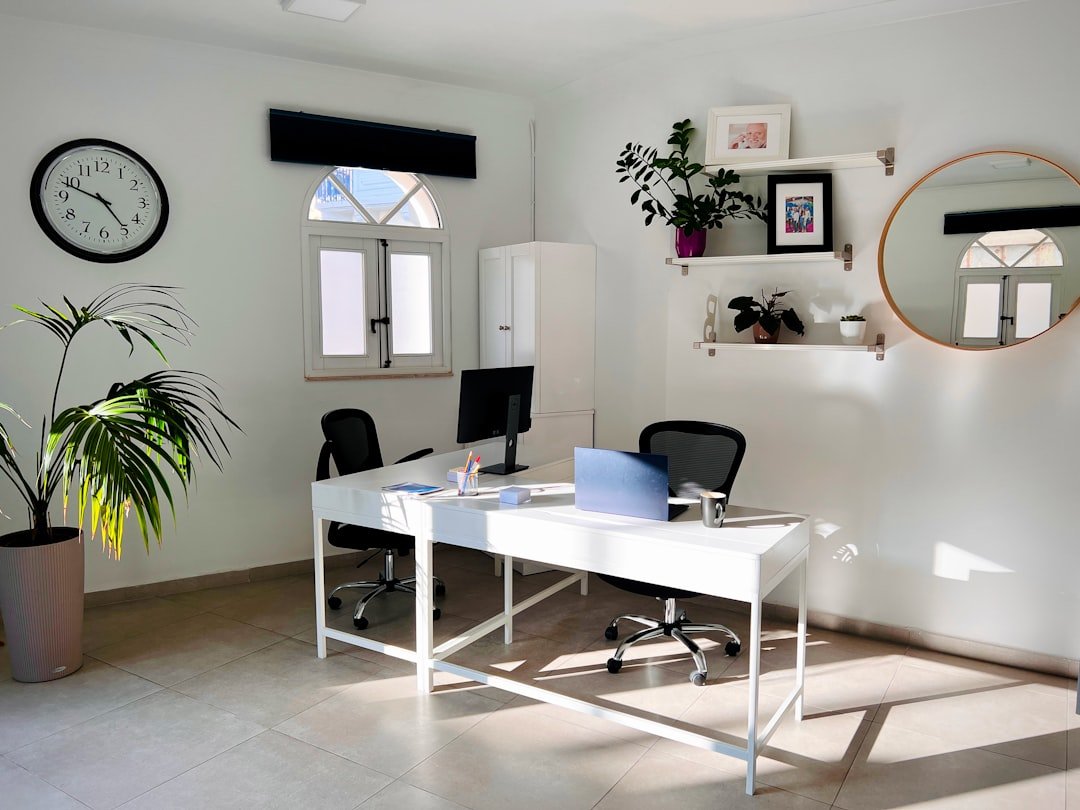
A 2020 study put 30 knowledge workers through one week in each of two offices with identical layouts, furnishings and orientations. The only difference was the facade: one had electrochromic glass, the other traditional blinds, producing lighting conditions of 40.6 and 316 equivalent melanopic lux respectively.
Participants in the optimised daylight and views condition slept 37 minutes longer, measured by wrist-worn actigraphs, and scored 42 per cent higher on cognitive simulations designed to test higher-order decision-making performance.
Two things about that result. The sleep finding is objectively measured and substantial. And the cognitive figure comes from a higher-order decision-making simulation, the same class of sensitive composite instrument that produces very large percentages in indoor air quality research, so a 42 per cent change on it does not translate into 42 per cent of anything you would notice at your desk. Stuffy air is the article where that instrument is examined directly.
Note also what varied. Not just brightness but daylight, views, and an eightfold difference in melanopic exposure sustained across a working week.
The brightness studies
A 2025 study using six lighting conditions took a more granular approach. Thirty participants were exposed to six lighting conditions based on melanopic equivalent daylight illuminance, at 54, 90, 150, 250, 417 and 694 lux at eye level, for 75 minutes each.
Its results: the most comfortable and satisfactory condition was 150 lux, no statistically significant differences were found in subjective alertness and mood, and the effects of lighting on cognitive performance were related to task type.
A separate study exposed 20 healthy adults to bright light against regular office light, 1,200 against 200 lux at eye level, for five hours in the afternoon. It found EEG differences, specifically lower relative delta power and higher beta power under the brighter condition, but no statistically significant differences in subjective sleepiness scores or in psychomotor vigilance performance.
That paper is candid about the wider picture, stating that although effects of light on alertness have been explored using both subjective and objective measures, the research results are far from consistent, especially for daytime studies.
Where an effect does show up
Not everything here is null.
A study of 56 participants tested repeated morning bright white light exposures in a simulated office, using brief light pulses followed by constant exposure. Subjects showed improved reaction speed in a simple attention task under a brighter light pulse, accompanied by higher heart rate variability, without habituation across repetitions. The difference disappeared when light exposure remained the same after the pulse. Higher reaction speed and heart rate variability also appeared in a complex attention task under constant bright light.
The authors’ framing is appropriately modest: intermittent bright light seems promising to acutely improve attentional performance in office workplaces.
Seems promising is not established, and the effect appeared with a change in light rather than a steady level.
What actually distinguishes the studies
Putting these together, a pattern emerges more useful than a verdict.
The study that changed daylight exposure across a working week found effects on sleep duration and on a composite decision-making measure. The studies that varied artificial brightness for 75 minutes or five hours found EEG changes and comfort preferences but no significant differences in self-rated alertness.
Duration and kind of change both differ. So does the outcome measured: actigraphy and a decision simulation in one case, sleepiness scales and vigilance tests in the others.
That is not a resolution. It is a reason to be suspicious of anyone claiming a specific desk lamp setting will make you sharper, and a reason to take daytime light exposure seriously as a circadian input rather than a productivity dial. The indoor environment literature repeats this shape: office temperature and office noise both turn out to depend on what exactly was varied and measured.
Comfort has its own answer
One finding is clean and worth acting on regardless.
In the six-condition study, participants found 150 lux melanopic equivalent daylight illuminance at eye level the most comfortable and satisfactory of six levels spanning 54 to 694. Comfort is a legitimate outcome and does not need a cognitive justification.
If your workspace is persistently gloomy or persistently glaring, fixing that is worth doing because working in it is unpleasant. If you get headaches, eye strain or visual disturbance in a particular lighting environment, that is worth mentioning to a doctor or an optometrist rather than treated as something to endure.
Common questions
Will a brighter desk lamp make me more alert?
The direct tests of brightness are unpromising. A 2025 study exposed 30 participants to six melanopic illuminance levels from 54 to 694 lux for 75 minutes each and found no statistically significant differences in subjective alertness and mood, with effects on cognitive performance related to task type. A separate study exposed 20 adults to 1,200 against 200 lux for five hours in an afternoon and found EEG differences but no significant differences in sleepiness scores or vigilance performance. That paper also notes research results in this area are far from consistent, especially for daytime studies. So brightness alone has not reliably produced measurable alertness gains.
What about daylight specifically?
That is where the strongest result comes from. A study of 30 knowledge workers, spending a week in each of two otherwise identical offices differing only in facade, compared conditions of 40.6 and 316 equivalent melanopic lux. Participants in the optimised daylight and views condition slept 37 minutes longer as measured by wrist-worn actigraphs and scored 42 per cent higher on cognitive simulations testing higher-order decision-making. Note the intervention changed daylight, views and melanopic exposure together across a whole week, so it does not isolate brightness, and the 42 per cent comes from a sensitive composite simulation rather than an everyday measure of work.
Does any lighting change improve attention?
One study found something specific. Fifty-six participants underwent repeated morning bright white light exposures in a simulated office, each consisting of a brief light pulse followed by constant exposure. Reaction speed in a simple attention task improved under a brighter light pulse, with higher heart rate variability and no habituation across repetitions, though this difference disappeared when exposure stayed the same after the pulse. Higher reaction speed also appeared in a complex attention task under constant bright light. The authors describe intermittent bright light as seeming promising for acutely improving attentional performance, which is deliberately cautious.
What lighting level should I use?
This article gives no prescription, and the honest reason is that the alertness evidence does not support one. What the six-condition study found on comfort was that 150 lux melanopic equivalent daylight illuminance at eye level was rated most comfortable and satisfactory out of six levels spanning 54 to 694 lux, with 30 participants exposed for 75 minutes each. That is a comfort finding rather than a performance one. If a lighting environment gives you headaches, eye strain or visual disturbance, raise it with a doctor or optometrist rather than solving by trial and error.
Light as a schedule, not a switch
The most useful thing this literature offers is a reframing of the question.
Treated as a switch, brightness turns out to do surprisingly little on demand. Two studies varying it directly found EEG changes and comfort preferences without significant differences in how alert people said they felt or how they performed on vigilance tasks, and one says outright that the field’s results are far from consistent.
Treated as a schedule, light looks more important. The one study that changed daytime exposure at the level of a whole week, through daylight rather than a lamp, found people slept 37 minutes longer. That is a circadian result, not an attention result, and sleep is the mechanism by which it would plausibly affect your Tuesday afternoon.
Which suggests spending less effort optimising the light at the moment you want to concentrate, and more on whether you see daylight at all during a working day. A duller intervention, and the one with the objectively measured outcome behind it.
Did this answer your question?
Thanks. That helps us decide what to fix.


Leave a comment