
A device that records everything you hear will not damage your memory the way a head injury does. What it will do, if the research on memory offloading holds, is remove the reason to form and retrieve certain memories yourself, and memory you do not practise is memory that weakens. That is not unique to AI pendants; it is the same effect that search engines and cameras have already been shown to produce in controlled studies. The difference is scale. A pendant that captures every conversation industrialises the offloading, and no study has yet measured what a year of that does to a person. The honest answer is that the mechanism is well documented, the devices are new, and the long-term evidence does not exist.
What the devices claim
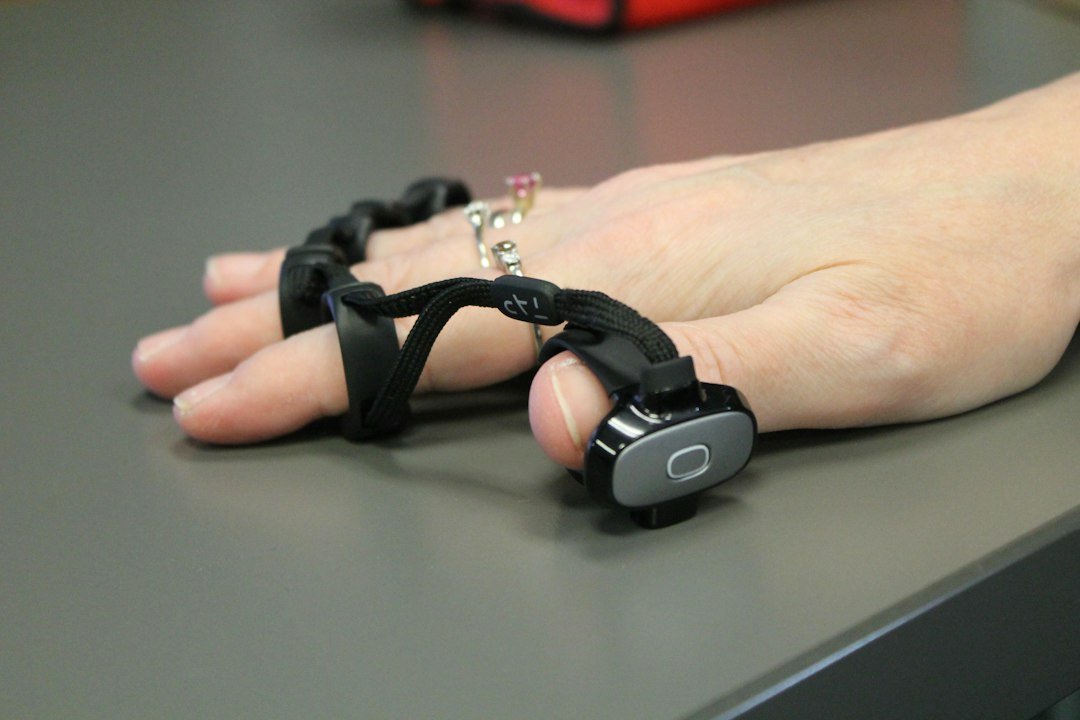
The “second brain” category has consolidated fast. Limitless, whose pendant was among the best known, was acquired by Meta in December 2025 and stopped selling hardware. Bee, a wristband that listened continuously, was bought by Amazon. The devices still on sale as of 13 September 2026 include Amazon’s Bee Pioneer, priced at $49.99, which describes itself as “the first personal AI that truly lives alongside you, building genuine understanding through continuous presence”, with “7 days of battery life per charge” and a promise that you can “Easily mute and unmute with a button press”. Plaud’s NotePin is another popular option, a press-to-record device that transcribes meetings and conversations for later search, and markets itself, in the phrase this article is about, as a second brain.
Note the difference in design. Bee is always on unless muted. Plaud records when you press it. That distinction matters for both the memory question and the consent question below.
The research on what happens when you offload memory
Three lines of evidence bear directly on this.
The Google effect. In 2011, Sparrow, Liu and Wegner published four experiments in Science on how expecting external storage changes recall. Their summary: “when people expect to have future access to information, they have lower rates of recall of the information itself and enhanced recall instead for where to access it.” They framed this as transactive memory: “The Internet has become a primary form of external or transactive memory, where information is stored collectively outside ourselves.” The effect is not that people become incapable of remembering; it is that they allocate memory differently, remembering the location of information rather than its content. A pendant that stores every conversation is an external memory with a search box, which is precisely the condition the study describes.
The photo-taking-impairment effect. In 2014, Henkel led participants through a museum and had them photograph some objects and simply observe others. “If participants took a photo of each object as a whole, they remembered fewer objects and remembered fewer details about the objects and the objects’ locations in the museum than if they instead only observed the objects and did not photograph them.” The moderator is instructive: “when participants zoomed in to photograph a specific part of the object, their subsequent recognition and detail memory was not impaired”. Attention is the ingredient. Passive capture displaced it; deliberate, focused capture did not. A device that records passively while you talk is closer to the whole-object photo than to the zoom.
The testing effect. The flip side of offloading is that retrieval is what strengthens memory. Roediger and Karpicke’s 2006 experiments had students study passages and then either take free-recall tests or restudy the material. “When the final test was given after 5 min, repeated studying improved recall relative to repeated testing. However, on the delayed tests, prior testing produced substantially greater retention than studying.” The act of trying to recall something, and partly failing, is what makes it stick over days and weeks. If the answer to “what did we agree in that meeting?” is always “ask the pendant”, the retrieval attempt never happens.
Put together: expecting storage lowers content recall (Sparrow), passive capture lowers memory for the captured event (Henkel), and skipping retrieval forfeits the main mechanism by which memories consolidate (Roediger and Karpicke). None of these is about AI. All of them apply to a device whose purpose is to make sure you never have to remember a conversation.
The caveats, which are real

Each of those studies has limits. The Google-effect work was a set of four small laboratory experiments, so treat it as a supported direction with an uncertain effect size rather than a fixed law. Henkel’s museum study tested memory over a single visit, not habits over months. Roediger and Karpicke’s testing effect was established with prose passages in a classroom setting, not with the ambient content of a working day.
More fundamentally, none of these studies measured the thing the wearables do. No published trial has fitted people with an always-on recorder for months and tested whether their unaided memory for conversations, names or decisions declines relative to a control group. The prediction from the mechanisms above is that it would, at least for the content being captured. It is a prediction, not a result, and we will say so plainly.
Offloading is often rational
The cognitive-offloading literature is not a case against tools. Its founding review defines offloading as ordinary and often sensible: it is “the use of physical action to alter the information processing requirements of a task so as to reduce cognitive demand”. Writing things down, setting reminders and keeping a calendar are offloading, and nobody argues they harm you. The review’s warning is narrower: whether to offload is itself a judgement about your own memory, and that judgement is easily wrong. You offload based on how good you think your memory is, and that estimate drifts once the device is doing the work. We cover this general problem in cognitive offloading and the AI confidence gap.
So the question is not whether to offload but what. Action items, phone numbers, the exact wording of a commitment: these are things a transcript stores better than you do, and offloading them costs little. The memories that matter more are the ones that require your own encoding to exist at all: who said what and how they seemed, what you thought at the time, the shape of a decision rather than its wording. A pendant captures audio. It does not capture your understanding, and it may reduce the attention you pay to forming one.
The consent and always-on problem

This is a memory article, but the recording issue cannot be skipped, because the always-on design is what makes the memory offloading total, and it is also what creates legal and social exposure.
In some jurisdictions, recording a private conversation without everyone’s agreement is a crime. California’s Penal Code section 632 applies to a person “who, intentionally and without the consent of all parties to a confidential communication, uses an electronic amplifying or recording device to eavesdrop upon or record the confidential communication”. Laws differ by country and state, and workplaces often have their own policies. The point is that a device which records by default shifts the burden onto you to know the rules everywhere you go and to tell everyone you speak to. Bee’s answer is a mute button; Plaud’s is that it does not record until pressed. The second design is both more consent-friendly and, on the evidence above, less corrosive of memory, because deliberate capture is the version that did not impair recall in Henkel’s experiment.
What a careful buyer would do
If you want a second brain, choose the one that does not replace your first. Record deliberately, for meetings where the exact wording matters, rather than continuously. Before you search the transcript, try to recall the answer, because the attempt is the thing that builds the memory. Tell people you are recording, both because the law may require it and because it changes what they say. And do not assume the summary is what happened: it is a model’s account of the audio, and it will be fluent whether or not it is right.
The pitch that a device will remember everything for you is not false. The cost is that “for you” is doing a lot of work. For how we handle manufacturer claims and the gap between mechanism and measurement, see how we research.
Common questions
Do AI wearables like Bee or Plaud NotePin hurt your memory?
No study has measured that directly. The relevant research shows that expecting information to be stored externally lowers recall of the content itself (the Google effect), that passively photographing objects reduced memory for them, and that retrieving a memory is what strengthens it. A device that records everything removes the need to retrieve, so the prediction is some loss of unaided memory for captured content. That remains a prediction.
What is the Google effect on memory?
A 2011 series of four experiments found that “when people expect to have future access to information, they have lower rates of recall of the information itself and enhanced recall instead for where to access it”. People remember where to find things rather than the things. The original experiments were small laboratory studies, so the effect size is uncertain even though the direction fits the wider offloading literature.
Is it legal to wear an always-listening AI device?
It depends where you are. Some jurisdictions, including California, make it an offence to record a confidential communication “without the consent of all parties”. Rules differ elsewhere, and employers may have their own. Devices that record continuously by default, such as Bee, put the burden on the wearer; devices that record only when pressed, such as Plaud NotePin, make consent easier to manage.
Does taking notes or recording meetings make you remember less?
Passive capture does, in the studies available. Photographing whole objects impaired later memory for them, but zooming in on a detail did not, which suggests attention rather than the act of recording is what matters. Deliberately recording a meeting while still engaging with it is different from letting a device capture everything while you switch off.
Is offloading memory to a device always bad?
No. Cognitive offloading is normal and often sensible; calendars and reminders are offloading. The research warning is that people misjudge when to offload, and that judgement drifts as a device takes over. Offload what a transcript stores better than you do, such as exact wording and action items, and keep retrieving the rest yourself, because retrieval is what consolidates memory.
Did this answer your question?
Thanks. That helps us decide what to fix.


Leave a comment