
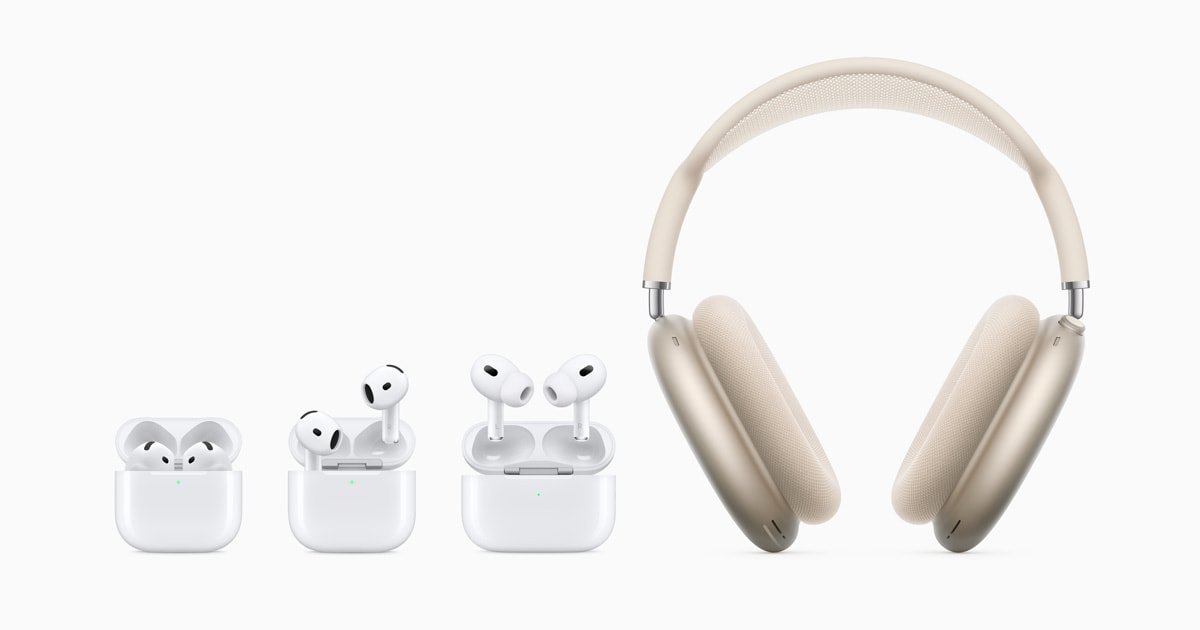
If you wear earbuds for eight hours of calls and focus music, the AirPods hearing features solve a different problem from the one you have. Hearing Protection reduces loud noise coming from outside your ears; it does nothing about the volume you choose for your own audio, which is the main risk for a desk worker. The hearing test is a decent screening tool with published independent validation and known weak spots at low frequencies. The hearing-aid mode is FDA-authorised for adults with perceived mild-to-moderate loss. None of the three is a substitute for an audiologist if you have symptoms.
Three features, three jobs
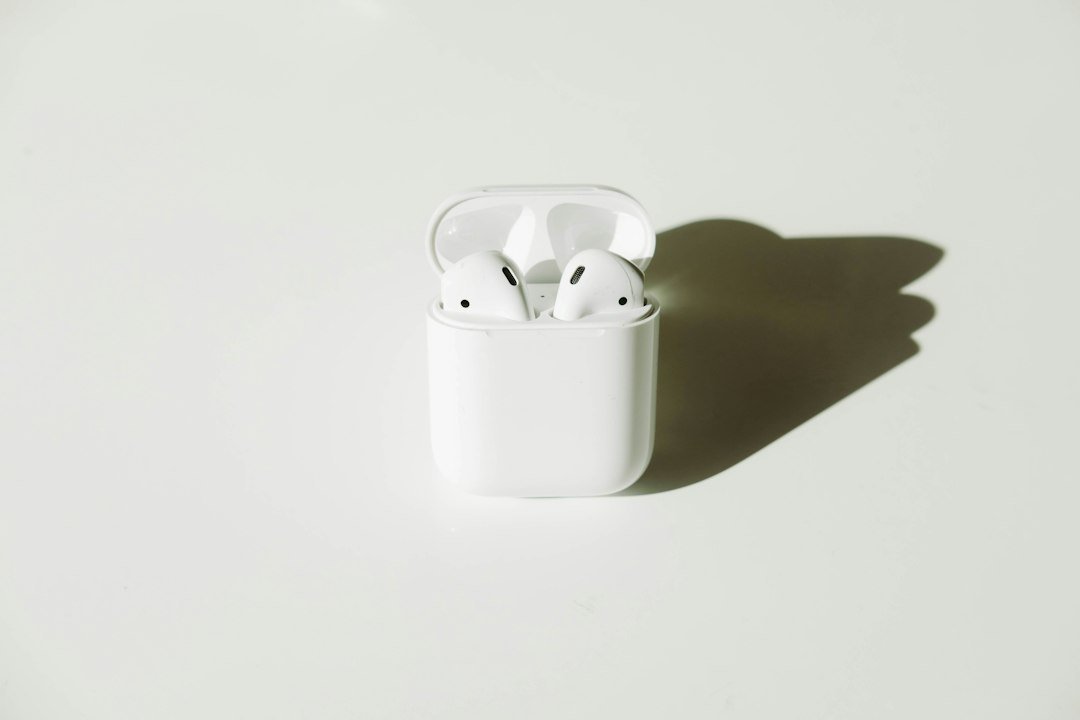
Apple introduced the set in September 2024 for AirPods Pro 2, and the support pages now cover AirPods Pro 2 and AirPods Pro 3 (accessed 11 September 2026). The hearing test “utilizes a standard clinical approach called pure-tone audiometry”, playing tones “across a range of frequencies from 250Hz to 8000Hz” and producing an audiogram stored in the Health app. The Hearing Aid feature “is intended for people with perceived mild to moderate hearing loss” and uses that audiogram to boost sounds around you. Hearing Protection (Apple also calls the underlying setting Loud Sound Reduction) uses the ear-tip seal for passive blocking while the H2 chip “helps to actively reduce louder, more intermittent noise at 48,000 times per second”.
Apple frames the whole package against a WHO figure that “approximately 1.5 billion people around the world are living with hearing loss”.
Hearing Protection: what the fine print says
Apple’s support page is unusually frank about the limits. Attenuation “depends on how well your AirPods fit, the volume of the sound around you, and the Listening mode you’re using”. The feature is “not suitable for protection against extremely loud impulse sounds, such as gunfire, fireworks, or jackhammers, or against sustained sounds louder than 110 dBA”. It is off when the buds are flat, when the Off listening mode is selected, or when Loud Sound Reduction is disabled. And the page warns that “Improper use of Hearing Protection may lead to permanent hearing damage.” Apple’s own technical paper puts the maximum attenuation in Noise Cancellation mode at “up to 30 decibels” (NRSA, dependent on fit).
The worked example on Apple’s page is the most useful sentence for a commuter: “if the environmental noise level is 100 dBA and the attenuation is 20 dB, your noise exposure level is 80 dBA.” Apple then cites the WHO: “if your noise exposure level is 80 dBA, that level of exposure for an adult is safe for up to 40 hours per week.”
That 80 dB for 40 hours figure comes from the WHO-ITU standard for safe listening devices, which sets “Mode 1 for adults: 80 dB for 40 hours per week” and “Mode 2 for children: 75 dB for 40 hours per week”. The WHO has estimated that “1.1 billion teenagers and young adults are at risk of developing hearing loss due to the unsafe use of personal audio devices and exposure to damaging levels of sound in noisy entertainment venues.”
Here is the catch for the all-day headphone wearer. Hearing Protection is about environmental noise reaching your ear from outside. The sound that matters most at a desk is the sound the AirPods themselves are producing. Noise cancellation can help indirectly, because a quieter background lets you turn your own audio down. But the WHO allowance is a dose: level multiplied by time. Eight hours a day at a volume that pushes past 80 dB will exhaust a 40-hour weekly allowance regardless of how well the tips seal. Apple’s Health app logs Headphone Audio Levels alongside environmental sound levels, and that log, not the Hearing Protection feature, is the number an all-day user should watch.
The hearing test: Apple’s data and independent checks
Apple’s clinical validation, described in its October 2024 technical paper, enrolled 201 participants who each took an audiologist-administered test and the AirPods test in randomised order. The median absolute difference in the four-frequency pure-tone average was 1.81 dBHL, and 98.4 percent of ears fell within ±10 dBHL of the reference. Agreement on the WHO hearing-loss grade was 86.4 percent. This is a sponsor-run study, but it is the study regulators saw.
Two independent groups have since tested it. A 2026 study in Otolaryngology–Head and Neck Surgery recruited 25 adults with self-reported mild-to-moderate loss, tested them by an audiologist in a sound booth, then twice with AirPods Pro 2 in a quiet room. “Across 400 comparisons, 86.5% of HTF thresholds were within 10 dB HL of PTA.” The authors concluded the feature “demonstrated clinically acceptable accuracy and reliability”. Small sample, single centre, and a quiet room rather than a noisy flat, but a fair result.
A Japanese otolaryngology team published a larger comparison in 2026, testing 140 volunteers against conventional audiometry. They found “significant differences at 250, 500, 1k, 2k, and 6 kHz”, and “at 250 and 500 Hz, device-derived thresholds were more than 5 dB lower on median than those obtained by conventional pure-tone audiometry”. The test tops out at a “maximum presentation level of 85 dB HL”, so it cannot characterise severe loss, and in people with markedly asymmetric hearing the better ear can hear tones meant for the worse one (cross-hearing), producing falsely good results. Usability was an issue for older adults, “with 32 of them requiring assistance”. Their conclusion is the right frame for everyone: “the hearable-based measurement should be regarded strictly as an adjunct rather than as a diagnostic alternative.”
For a screen worker, the practical reading is: a normal AirPods result is moderately reassuring at the mid and high frequencies that carry speech, less so at the low end; an abnormal result, or any result that does not match your experience (tinnitus, muffled hearing, one ear worse), warrants a booth test.
The hearing-aid mode
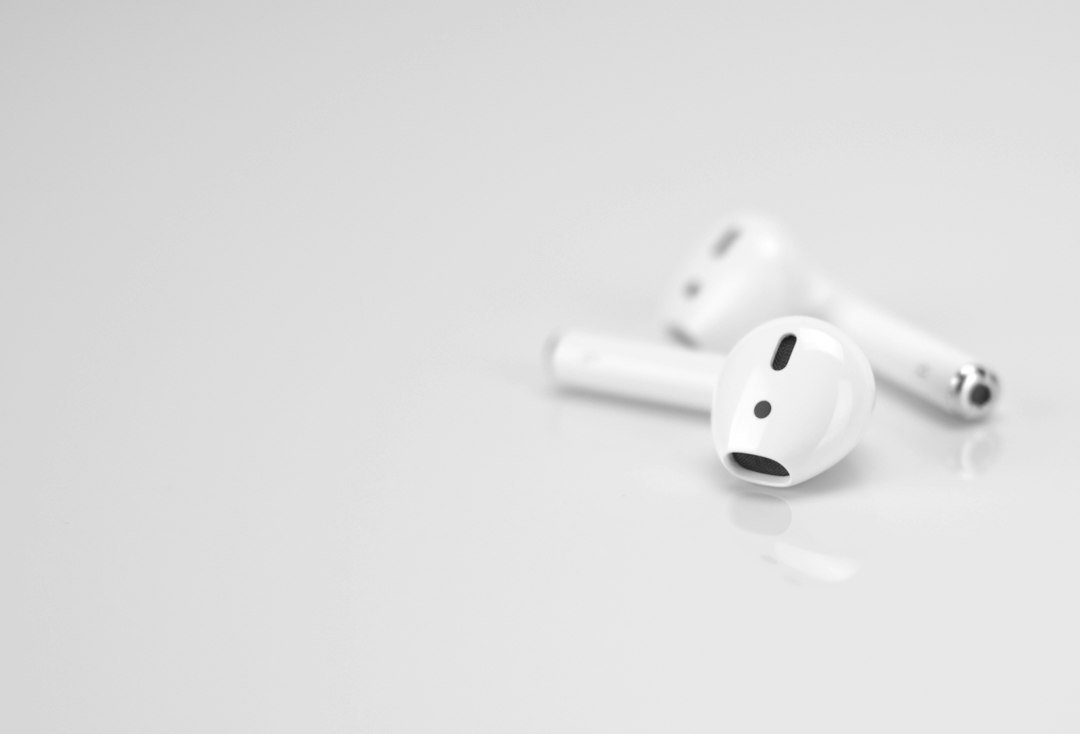
The FDA authorised the Hearing Aid Feature on 12 September 2024 as “the first over-the-counter (OTC) hearing aid software device”, via the De Novo pathway for novel low-to-moderate-risk devices. It is intended “to amplify sounds for individuals 18 years or older with perceived mild to moderate hearing impairment”.
The FDA’s summary of the evidence: the feature “was evaluated in a clinical study with 118 subjects with perceived mild to moderate hearing loss, at multiple U.S. sites”, and “subjects who used the HAF self-fitting strategy achieved similar perceived benefit as subjects who received professional fitting of the same device”. No device-related adverse events were observed. Apple’s paper gives the numbers behind that: self-fit and professional-fit groups scored 25.5 and 26.6 on the IOI-HA benefit questionnaire, and the feature caps output at 117 dB SPL.
Two limits are worth stating. First, the comparison was self-fitting versus professional fitting of the same AirPods, not AirPods versus a prescription hearing aid. Second, “perceived mild to moderate” is the entry criterion; if the test suggests worse loss, Apple’s own flow directs you to a hearing-care professional.
What to actually do if you wear earbuds all day
Treat the three features for what they are. Use Hearing Protection on the commute and in loud offices, and accept that fit determines how much it helps. Watch the headphone audio level log and keep the weekly dose inside the WHO 80 dB for 40 hours allowance. Take the hearing test annually as a screen, and take any low-frequency oddity with a grain of salt. If you get a result outside the normal grade, or if you have tinnitus, muffled hearing or an asymmetry, book an audiology appointment; the independent studies and Apple’s own paper agree that a clinic test remains the standard. For our approach to sponsor-run versus independent validation, see how we research.
Common questions
Does AirPods Hearing Protection protect against loud music from the AirPods themselves?
No. Apple’s documentation describes Hearing Protection as reducing loud sound from your environment, with attenuation that depends on fit and listening mode. It does not lower the volume of your own audio. The WHO safe-listening allowance for adults is 80 dB for 40 hours per week, so your chosen volume and listening time are what matter for an all-day user.
How accurate is the AirPods hearing test compared to an audiologist?
In an independent 2026 study of 25 adults, 86.5% of AirPods Pro 2 thresholds fell within 10 dB HL of booth audiometry. A separate 2026 study of 140 volunteers found low-frequency thresholds ran more than 5 dB better than the clinic at 250 and 500 Hz and warned of cross-hearing errors in asymmetric loss. Apple’s own 201-person study reported a 1.81 dBHL median difference on the four-frequency average.
Are AirPods Pro real hearing aids?
The Hearing Aid Feature is an FDA-authorised over-the-counter hearing aid software device for adults 18 and over with perceived mild-to-moderate hearing loss. In a 118-person study, self-fitting produced similar perceived benefit to professional fitting of the same device. That is not the same as being compared with a prescription hearing aid, and severe loss is outside its intended use.
Which AirPods support the hearing test and hearing aid features?
Apple’s documentation covers AirPods Pro 2 and AirPods Pro 3 paired with a compatible iPhone or iPad, with users aged 18 or older. Availability of each feature varies by country because the hearing test and hearing aid modes are regulated health features; the Hearing Aid feature has been unavailable in some regions pending approval.
Can the AirPods hearing test replace a clinical hearing test?
No. The Japanese validation team’s conclusion is that the measurement “should be regarded strictly as an adjunct rather than as a diagnostic alternative”, and the test cannot present tones above 85 dB HL, so it cannot assess severe loss. If you have symptoms, see an audiologist.
Did this answer your question?
Thanks. That helps us decide what to fix.


Leave a comment