
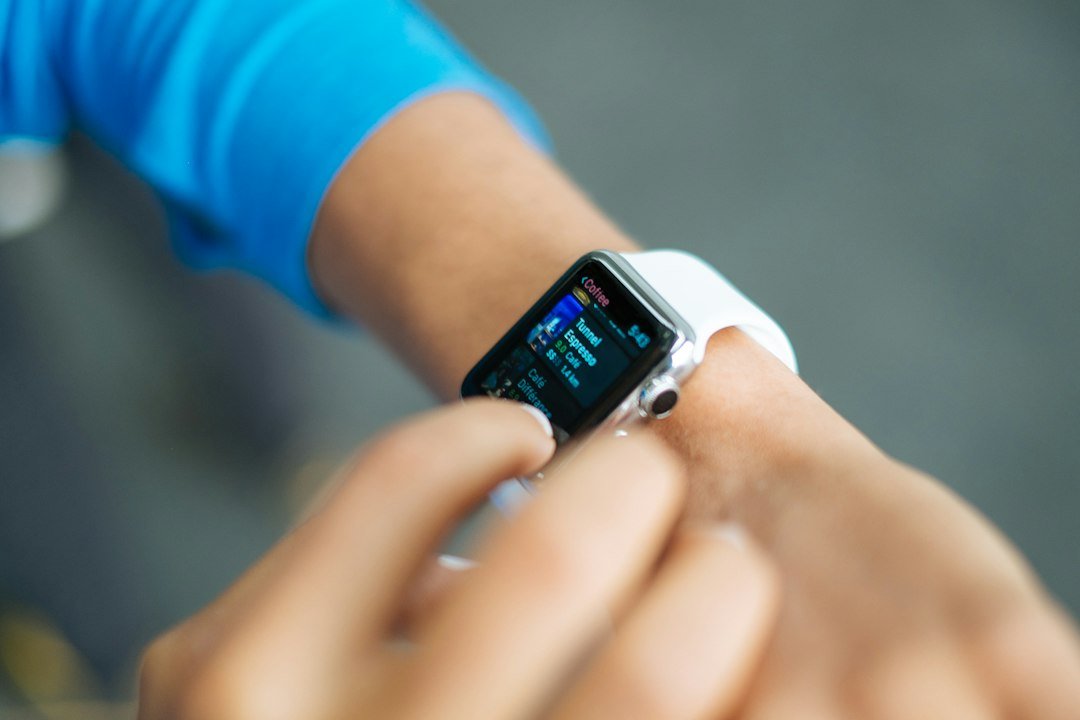
Apple has joined WHOOP and Oura in turning your wearable data into a single “age”. Health Age, announced alongside Apple Watch Series 12, will tell you whether your body is tracking older or younger than your birth certificate. It is a persuasive number, and it is worth separating what sits underneath it, which is solid, from the number itself, which nobody outside Apple can yet check.
The short version: the inputs are real predictors of how long people live. The composite score is an unpublished formula, the feature has not shipped, and no trial has shown that seeing a wearable “age” changes anyone’s health.
What Apple has actually said
Not much. The announcement says the Longevity tab includes Health Age, an Apple Watch feature that shows users how certain metrics are tracking relative to their actual age. It arrives with a redesigned Health app that, in Apple’s words, will arrive later this year, starting in U.S. English.
Apple’s own release does not list the inputs. Press coverage of the launch describes the score as drawing on VO2 max, resting heart rate, sleep quality and HRV.
This is a category, not an Apple invention. WHOOP and Oura sell equivalent physiological-age features, and none of these companies has published its algorithm, so everything below is about the ingredients, not the recipe.
The inputs are genuinely predictive
This is the part the marketing gets right.
Cardiorespiratory fitness is one of the strongest predictors of survival in the literature. In a Cleveland Clinic cohort of 122,007 patients who had treadmill tests, cardiorespiratory fitness was inversely associated with all-cause mortality without an observed upper limit of benefit. The fittest group had an adjusted hazard ratio of 0.20 compared with the least fit, which is an 80% lower risk of death over the follow-up period after adjusting for other risk factors.
Resting heart rate carries a smaller but consistent signal. A meta-analysis in CMAJ pooled 46 prospective studies and found the relative risk with each 10 beats/min increment of resting heart rate was 1.09 for all-cause mortality. The same paper reported that substantial heterogeneity and publication bias were detected, so the precise figure deserves some caution, but the direction is not in dispute.
So a score built on fitness and resting heart rate is built on real epidemiology. If your score is poor because your VO2 max is low and your resting heart rate is high, that is meaningful information.
The weak link: the watch’s estimate of fitness
The mortality data above came from treadmill tests in a clinic. Your watch does not run a treadmill test; it estimates VO2 max from heart rate and movement during outdoor walks and runs.
An independent validation study in PLOS ONE had thirty participants wear an Apple Watch for 5 to 10 days and then complete a maximal treadmill test with indirect calorimetry. with a mean difference of 6.07 mL/kg/min. The individual spread was wide, with limits of agreement from -6.11 to 18.26 mL/kg/min, and the mean absolute percentage error was 13.31%.
That study used earlier hardware, and Apple says the Series 12 sensors are improved, a claim based on Apple’s own testing. But the principle matters: if the most heavily predictive input can be off by six units on average, and VO2 max declines with age, then an “age” derived from it inherits that error. A watch that reads your fitness low will tend to make you look older than you are.
“Biological age” is not one thing
The deeper problem is that there is no agreed definition of biological age for a wearable to approximate.
Researchers have built many biological age measures, from DNA methylation “epigenetic clocks” to telomere length to frailty indices, and they do not agree with each other. In two Scottish birth cohorts, weak, non-significant correlations were found between epigenetic clock estimates and telomere length, even though each was independently linked to mortality.
If laboratory measures of biological age disagree, a wrist-based composite cannot be “accurate” in any absolute sense. At best it is a convenient summary of fitness, heart rate and sleep, expressed in years because years are easy to understand. That is a communication choice, not a measurement.
What is not known
Three things, and they are the important ones.
Apple has not published how Health Age is calculated or validated. Until it does, or until independent researchers test it, there is no way to know how it weights its inputs or how stable it is from week to week.
No study has shown that any wearable age score predicts death or disease better than its individual components. It may, but it has not been demonstrated.
We could not find a trial showing that giving people a wearable “age” improves their behaviour or their health. Feedback in years may motivate some people and demoralise others; that is an open question, not a settled benefit.
How to use it sensibly
Treat the trend as more informative than the number. A Health Age that drifts younger over six months because your resting heart rate fell and your estimated fitness rose reflects real change, whatever the absolute figure says.
Look through the score to the inputs. If the number is poor, the Health app will show which metric is driving it, and those metrics have their own evidence: fitness responds to aerobic training, resting heart rate follows fitness, and sleep responds to regular hours.
Do not compare across brands. WHOOP, Oura and Apple use different inputs and different unpublished formulas, so a gap between them tells you about the formulas, not about you.
This is not individual medical advice. A consumer wellness score is not a diagnosis, and concerns about heart health or fitness belong with a clinician.
Common questions
How does Apple Watch calculate Health Age?
Apple has not published the formula. Its announcement says only that the feature shows how certain metrics are tracking relative to your actual age, and launch coverage describes it as drawing on VO2 max, resting heart rate, sleep quality and HRV.
Is Apple Watch Health Age accurate?
There is no independent validation yet, and the feature has not shipped. Its inputs are genuine predictors of mortality, but an independent study found Apple Watch underestimated VO2 max by a mean of 6.07 mL/kg/min with a 13.31% average error, which would feed through to any age built on it.
Is biological age a real measurement?
It is a family of estimates rather than one measurement. Laboratory versions such as epigenetic clocks and telomere length correlate only weakly with each other, so no wearable score can claim to measure “the” biological age.
Can I lower my Health Age?
Probably, by improving the inputs. Cardiorespiratory fitness has the strongest link to survival, with the fittest treadmill-tested patients showing an adjusted hazard ratio of 0.20 against the least fit, and it responds to regular aerobic exercise.
The bottom line
Health Age packages real predictors, mainly fitness and resting heart rate, into a number that is easy to understand and impossible to verify. Use it as a trend line and a prompt to look at the underlying metrics. Do not read it as your body’s true age, because no such figure exists, and do not pay for a new watch on the strength of it until someone other than the manufacturer has tested it.
Did this answer your question?
Thanks. That helps us decide what to fix.


Leave a comment