
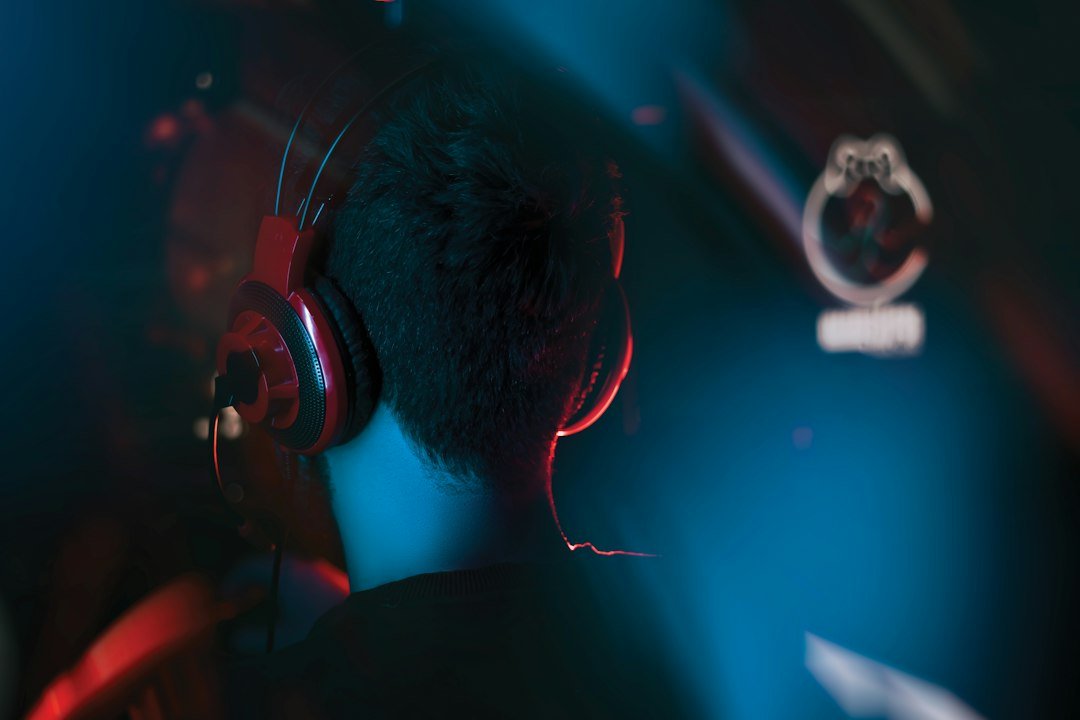
A new class of gadget wants to sit on your head while you work. Headphones with EEG sensors in the ear pads promise a live “focus score”. Headbands promise to train calm and concentration through feedback. The Global Wellness Summit’s 2026 trend report put the wider category first on its list, declaring that neurowellness is moving from niche to mainstream.
There are two separate claims inside these products, and they have very different evidence behind them. The first is that a consumer device can measure something real about your brain. That one holds up. The second is that seeing or training on that measurement makes you better at concentrating. That one has been tested for decades in its clinical form, and under blinded conditions it mostly disappears.
What these devices are
Electroencephalography (EEG) records the tiny voltage changes produced when large groups of neurons fire together. Laboratory systems use dozens of wet electrodes on the scalp. Consumer devices use a handful of dry sensors on the forehead, behind the ears or in headphone pads.
The products split into two types. Trackers, such as EEG headphones, turn the signal into a focus or fatigue score and nudge you to take a break. Trainers, such as meditation headbands, play feedback (a sound, a visual) that changes as your brain activity changes, which is neurofeedback.
They are not cheap. One market round-up describes Neurable’s product plainly: the $499 headphones combine regular audio with 12-channel EEG. Muse advertises its headbands as starting at $474.99.
Claim one: the signal is real
This part is well supported. Independent researchers at the University of Victoria tested a Muse headband against standard laboratory tasks and reported that they could observe and quantify the N200 and P300 ERP components in the visual oddball task. Those are textbook brain responses, and picking them up with a low-cost headband was a genuine result.
That validation has limits worth knowing. It was done seated, under controlled conditions, averaging many trials. A desk worker who talks, chews, frowns at a stack trace and turns to a second monitor produces muscle and eye-movement signals far larger than the brain signal. A round-up of the category notes that EEG faces limits from motion and eye-movement artifacts, and that a brain score does not equal a medical diagnosis or direct access to thoughts.
So the hardware can detect brain activity. Whether a proprietary “focus score”, computed from a few dry sensors on a moving head, tracks anything you would recognise as focus has not been independently validated. The companies’ algorithms are not public.
Claim two: training on the signal improves attention
Neurofeedback is not new. Its most studied use is attention-deficit/hyperactivity disorder, which makes ADHD trials the best available test of the idea that EEG feedback can improve attention.
The most rigorous summary is a 2025 meta-analysis in JAMA Psychiatry from the European ADHD Guidelines Group. It restricted itself to outcomes rated by people who did not know which treatment a participant had received, which is the step that removes wishful thinking. Probably blinded reports of ADHD total symptoms showed no significant improvement with neurofeedback (k = 20; n = 1214; SMD, 0.04; 95% CI, -0.10 to 0.18).
There was a small effect, an SMD of 0.21, when the analysis was limited to nine trials using established standard protocols. Of five cognitive outcomes, only processing speed improved, and only slightly. The authors’ overall conclusion: neurofeedback did not appear to meaningfully benefit individuals with ADHD, clinically or neuropsychologically, at the group level.
If clinic-grade neurofeedback, delivered over many supervised sessions to people with a diagnosed attention disorder, produces an effect near zero on blinded measures, it is hard to argue that a consumer headband will do more for a healthy developer.
Why unblinded results look so good
Neurofeedback studies without a convincing placebo tend to be positive, and one experiment shows why.
Researchers recruited thirty patients with primary insomnia and gave them both real neurofeedback and sham feedback, in a double-blind design where neither patients nor experimenters knew which was which. They found both neurofeedback and placebo-feedback to be equally effective as reflected in subjective measures of sleep complaints. The improvements did not appear in objective EEG measures of sleep at all.
The lead author later generalised the point: purely subjective measures will almost always show improvements independent of whether real NFT or a sham-control is presented. Sitting quietly, wearing a device, expecting to improve and being attended to is itself an intervention.
That matters for reading testimonials. People who buy a $499 device and use it daily feel more focused. The sham data says they would probably feel that with a headband that was switched off.
What is not known
Whether tracking alone helps. Trackers do not train anything; they tell you when your score drops and suggest a break. We could not find a controlled trial showing that a consumer EEG focus score improves work output, error rates or fatigue compared with a simple timer or your own judgement.
Whether the scores are valid in real use. Signal validation exists for seated laboratory tasks. Independent validation of commercial focus metrics during ordinary desk work, with movement and speech, is missing.
What happens to the data. Brain recordings are an unusually sensitive category of personal data, and the long-term handling of it by device makers is a policy question the evidence cannot answer.
Whether meditation guidance is the active part. Headbands marketed for meditation bundle EEG feedback with guided sessions. Any benefit may come from the practice and not from the sensor, and we found no sham-controlled trial in healthy adults that separates the two.
What to do instead, or as well
The honest recommendation is dull. The things with evidence for sustained attention at a desk are sleep, regular breaks at natural stopping points, fewer interruptions and a phone that is out of reach. None of them costs $499.
If you are curious and can afford it, a brain-sensing device is a harmless experiment, and the feedback may make a meditation habit more engaging, which is a legitimate if indirect benefit. Buy it as a toy that might help you build a routine. Do not buy it as a measurement instrument, and do not reorganise your working day around a score nobody has validated.
This is not individual medical advice. If you have or suspect ADHD, neurofeedback is not a substitute for assessment and treatment, and decisions about that belong with a clinician.
Common questions
Do EEG headbands like Muse actually work?
They measure real brain signals: independent researchers detected standard N200 and P300 responses with a Muse headband. Whether training with the feedback improves attention is a different question, and blinded trials of neurofeedback do not support it.
Does neurofeedback improve focus?
In the best test available, a meta-analysis of blinded outcomes in ADHD, neurofeedback showed no significant improvement in total symptoms (SMD 0.04 across 20 trials and 1214 participants). The authors concluded it did not meaningfully benefit people with ADHD at the group level.
Are brain-sensing headphones accurate?
The sensors can pick up EEG, but consumer devices are vulnerable to motion and eye-movement artifacts, and the focus scores are computed by proprietary algorithms that have not been independently validated during normal desk work.
Why do people say neurofeedback works for them?
Expectation is powerful. In a double-blind trial of thirty insomnia patients, real and sham neurofeedback were equally effective on subjective sleep complaints, and the improvements did not show up in objective sleep measures.
The bottom line
Consumer EEG is a real measurement wrapped around an unproven intervention. The hardware detects brain activity; the claim that watching or training that activity sharpens your focus has not survived blinded testing even in clinical settings. If you want one, enjoy it as an expensive meditation prop. If you want better concentration, the evidence still points to sleep, breaks and fewer interruptions.
Did this answer your question?
Thanks. That helps us decide what to fix.


Leave a comment