

A walking pad is a treadmill with the handrails removed and the top speed capped, sold to slide under a standing desk. The pitch is that you can work and walk at the same time and quietly undo a sedentary day.
The research behind that pitch is older than the product category. Treadmill desks have been studied since the late 1980s, and there is now a meta-analysis of the energy and cardiometabolic data, a meta-analysis of the typing and cognition data, and one 13-month randomised trial in real offices. Read together, they support a narrower claim than the marketing: walking while you work raises energy expenditure by roughly 100 kcal an hour, costs you some typing speed, and has not yet been shown to change blood pressure, glucose or weight in a workplace.
What a walking pad is
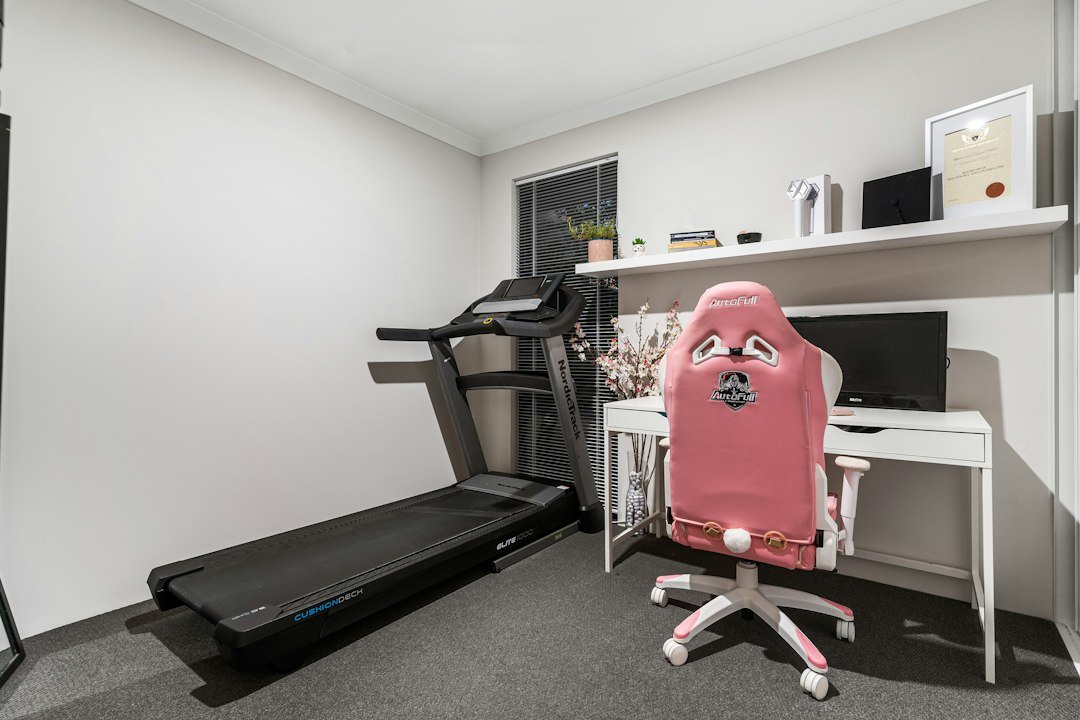
The consumer category runs slower and lighter than a gym treadmill. One widely sold model, the WalkingPad C2, lists a minimum speed of 0.5 km/h and a maximum of 6 km/h, with a recommended two hours of continuous use before the motor is rested. Most of the research uses speeds at the bottom of that range: the trials below walked people at 1.5 mph, which is 2.4 km/h, and the energy meta-analysis pooled studies at 3 mph or slower.
The studies were done on treadmills with a desk placed over them; the under-desk pad is a cheaper, foldable version of the same thing, and the findings transfer.
Energy expenditure and the cardiometabolic gap
The most useful single source is a 2021 systematic review and meta-analysis in BMC Public Health by Oye-Somefun and colleagues. It pooled 13 studies, seven in laboratories and six in workplaces, with 351 participants in total.
In the laboratory studies, walking at 3 mph or slower on a treadmill desk raised energy expenditure by 105.23 kcal per hour compared with sitting, with a 95% confidence interval from 90.41 to 120.04. Oxygen consumption rose by 5.0 mL/kg/min. Blood pressure did not change significantly.
In the workplace studies, treadmill desk users sat for 1.73 fewer minutes per hour across a 24-hour period, with a confidence interval from 3.30 to 0.17. That is a small effect: over a 16-hour waking day it is under half an hour. When the authors restricted the analysis to the two randomised trials, the working-hours reduction was larger, 3.58 minutes per hour, but the confidence interval crossed zero.
The cardiometabolic result is the one to hold onto. Across blood pressure, fasting glucose, HDL, triglycerides, total cholesterol, body fat and BMI, the workplace studies found no statistically significant change. The authors note the direction of effect favoured the treadmill for most outcomes except BMI and suggest the trials were underpowered. That is a fair reading, and it is also the honest position: the health claim is plausible and unproven. Laboratory sessions lasted five to 30 minutes; workplace follow-up ranged from three to 18 months.
What happens to your typing
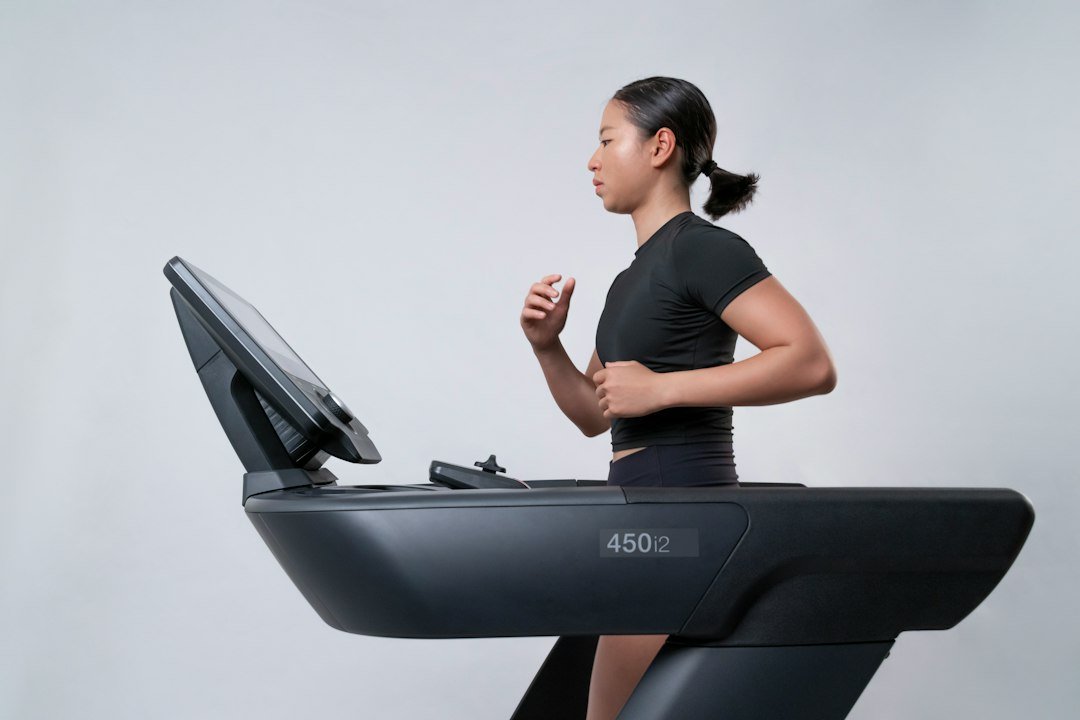
The second question is whether you can still do your job on the belt. A 2020 meta-analysis by Podrekar, Kozinc and Šarabon in the journal WORK pooled 18 studies of cycle and treadmill desks against seated work.
Both interventions reduced typing speed, and treadmills did so more than cycle desks. The standardised mean difference for treadmill desks was minus 0.80, a large effect by convention, against minus 0.35 for cycling. Typing errors rose significantly with cycling but not with treadmill walking, although only two studies contributed to the treadmill error analysis.
The cognitive tests told a different story. There was no effect on the Stroop or Eriksen flanker tests, which measure selective attention, and recall ability improved (SMD 0.68 across two studies with 75 participants). The authors’ conclusion was that active workstations affect work performance, but most likely not because cognition drops. Their suggested explanation is unfamiliarity: most participants had never used a treadmill desk, and dual motor tasks improve with practice. That is a hypothesis, not a finding. Every study in the typing analysis was done in a laboratory, and the average quality score was 5.2 out of 10.
A single trial cuts across the pattern. Larson and colleagues randomised 75 healthy adults to walk at 1.5 mph or sit while doing memory, attention and typing tests. The walking group was significantly worse on every typing measure and scored lower on total learning and on a paced attention task, though delayed recall did not differ. A separate 2020 randomised comparison of rest, cycling and treadmill workstations found the opposite on typing: participants were faster and more accurate during the active session, with better attention but worse verbal memory. The evidence on fine-motor work is inconsistent in direction, but where it points, it points to a cost.
The one long trial in real offices
Almost all of this is laboratory data measured in minutes. The exception is a randomised controlled trial by Bergman and colleagues, published in The Lancet Public Health in 2018, which installed treadmill workstations in 17 offices across 13 companies in Umeå, Sweden.
Eighty overweight or obese office workers aged 40 to 67 were randomised, 40 to treadmill workstations for optional use and 40 to carry on at their sit-stand desks. Walking time was measured with a thigh-worn accelerometer for seven days at a time over 13 months.
Daily weekday walking rose by 18 minutes in the treadmill group and 1 minute in the control group, a difference of 22 minutes with a confidence interval from 7 to 37. Weekend walking did not change. The trial’s own success criterion was a 30-minute difference, so the primary outcome was not met. One adverse event was recorded, a participant who stepped on their own Achilles tendon. The authors called the result statistically significant but smaller than expected, and flagged the possibility that walking at work is offset by moving less outside it.
Where the evidence runs out
A Cochrane review of workplace interventions for reducing sitting, covering 34 studies and 3,397 employees, described active workstations such as treadmill and cycling desks as having unclear or inconsistent effects on sitting time. That was based on searches up to August 2017, so it predates some of the studies above, but nothing since has produced a clean workplace result on health outcomes.
Three gaps are worth naming. First, no study has measured real productivity in a real job; the typing data are laboratory tasks lasting minutes. Second, no trial has shown a cardiometabolic outcome in a workplace, only laboratory energy expenditure and non-significant point estimates. Third, the consumer walking pad, as opposed to a commercial treadmill desk, has not been studied at all; the physics are the same, but adherence with a foldable pad in a home office is unknown.
Common questions
Does a walking pad burn calories?
Yes, measurably. The pooled laboratory estimate is 105.23 extra kcal per hour at 3 mph or slower compared with sitting, with a confidence interval from 90.41 to 120.04. Two hours a day would be roughly 200 kcal. Whether that translates into weight change over months has not been shown in a workplace trial.
Can you type while using a walking pad?
You can, but you will be slower. A meta-analysis of 18 studies found treadmill desks reduced typing speed with a large standardised effect (minus 0.80), while typing errors did not rise significantly. Reading, calls and video meetings are where the research suggests the belt costs you least, since attention tests did not decline.
Is a walking pad good for your health?
The direction of the evidence is favourable, but the effect has not been demonstrated. Across 13 pooled studies, treadmill desk use raised energy expenditure and reduced sitting time, but produced no statistically significant change in blood pressure, glucose, lipids, body fat or BMI in workplace settings. If the aim is a health outcome, the honest answer is not yet known.
How fast should you walk on a walking pad while working?
The trials that measured typing and cognition mostly used 1.5 mph, or 2.4 km/h, and the energy estimate covers speeds up to 3 mph. Consumer pads typically start at 0.5 km/h and top out around 6 km/h. There is no evidence-based optimum; the studies suggest slower speeds preserve typing better and still cost around 100 kcal an hour.
The bottom line
A walking pad will make you move more at your desk and burn roughly 100 extra calories an hour while you do. It will also slow your typing, probably by a few words per minute, without making you think worse. The 13-month office trial found people walked about 22 minutes more per weekday than controls, which is real but below what the researchers hoped for. What no study has shown is a health benefit in the workplace: blood pressure, glucose and weight did not move significantly in the pooled data. If you buy one, buy it for calls, reading and the sitting time it replaces, and treat any claim about your metabolism as a hypothesis the research has not yet confirmed. This site has tested no products.
Did this answer your question?
Thanks. That helps us decide what to fix.



Leave a comment