

Working from home affects wellbeing in two directions at once, and the two largest studies of 2026 each caught one of them. A study of 588,322 American workers in Science found that jobs which became remotable after the pandemic saw more time alone, worse mental health and more use of mental health services, with the effects concentrated in people who live alone. A study of 7,704 employees at one healthcare organisation, published a month later, found fully remote staff reported the highest wellbeing and fully onsite staff the lowest, with no sign that remote workers felt less connected.
The headlines called this a contradiction. Read the methods and it is not. One study measures what happens to a whole occupation when the office empties out. The other measures how people feel when they chose where to work. The difference between those two questions is the useful part of this article.
The population study
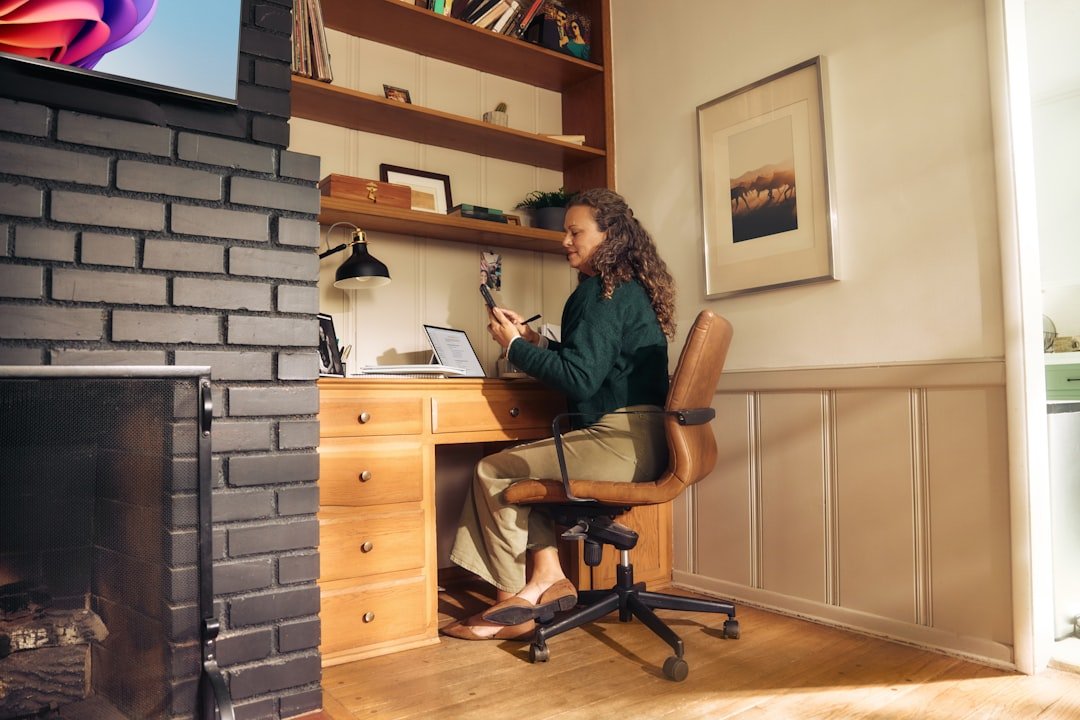
The Science paper drew on five nationally representative surveys of American workers, 588,322 responses from 2011 to 2024, omitting the peak pandemic years of 2020 and 2021. Its design is a difference-in-differences comparison: changes in mental health among people in remotable jobs, which saw a large and persistent rise in remote work after COVID, against changes among people in non-remotable jobs, where remote work increased far less.
Remotable means the job could be done from home, whether or not a given worker actually was. Software engineers and clerical staff count; chefs and nurses do not. Roughly a third of US workers are in remotable occupations.
The findings, in the authors’ summary: remote work increases time spent alone, worsens mental wellbeing across multiple measures, and increases the use of mental health services and prescriptions. Workers in remotable jobs logged roughly an extra hour alone each workday, and their likelihood of a whole day without human contact rose sharply, especially for those living alone. Remote workers were not making up for it after hours; the study saw a decrease in time with friends after the workday relative to non-remotable occupations.
Two things temper that. The effect on the standard distress scale was 0.1 standard deviations, which is real at the population level and small for any individual. And the authors state a limit directly: because their data end in 2024, they cannot fully capture long-term adaptations among remotable workers. People may be building social lives around remote work and the benefit has not shown up yet.
The lead author is an economist at the Federal Reserve Bank of New York. No industry funding is declared.
The single-employer study

The Frontiers in Psychology paper used a time-lagged design with 7,704 employees of a large healthcare organisation split three ways: 1,869 remote, 2,099 hybrid and 3,736 onsite. Wellbeing was measured on a five-point scale in a 2023 survey, and turnover was checked a year later.
Remote employees reported the highest wellbeing, at 4.22, followed by hybrid at 4.12 and onsite at 3.89, with the differences statistically significant. The study also found little evidence that remote workers felt less connected to colleagues or workplace culture, and higher wellbeing predicted lower turnover.
Two things temper that. The organisation is a hospital system, so onsite workers include clinical staff doing physically and emotionally heavier work than the administrative and analytical roles more likely to be remote; the wellbeing gap could reflect what people do, not only where. And the study is of people in the arrangement they are in, which for many means the arrangement they chose. Section 4 of this site’s standards asks for relationships that could bear on a finding. Three of the four authors work at the organisation’s own leadership institute, so this is an employer studying its own staff. That is not a commercial conflict and it is worth knowing.
Why both are right

Put the two side by side and they describe the same world from different angles.
The Science study asks: when an occupation shifts to remote work, what happens to the average person in it, including the people who did not want the shift, the people who live alone, and the people whose social life was the office? Answer: a small average rise in distress, driven by isolation, concentrated in those living alone.
The Frontiers study asks: among employees at one organisation, most of whom are in the arrangement that suits them, who reports the best wellbeing? Answer: the remote ones, and the value of choice is the variable the lead author draws out.
The reconciliation is that remote work is good for the people it suits and costly for the people it isolates, and a mandate in either direction lands on both groups. The Science authors’ own recommendation is not a return to the office; it is to make remote work less isolating, for example by coordinating in-office days for hybrid workers or encouraging informal interaction, even online. That is a narrower and more defensible conclusion than either headline.
What this means for a screen worker
The variable to watch is not the location. It is time alone and whether it is recovering after work. The Science study’s sharpest finding was that remote workers did not compensate socially in the evening, which connects to what this site found on after-hours messages and burnout: the boundary between work and the rest of the day is where the cost accrues.
It also connects to two other findings here. The effect of screen time and misery turned out to be tiny in the population data, and digital detoxes helped mostly through what people did with the freed time. Isolation is the mechanism that survives across all of these, not the device or the desk.
If distress is persistent, whether or not you connect it to how you work, that is a conversation with a doctor or a mental health professional, not a workplace policy question. The walking evidence on exercise as a treatment for depression is worth knowing about alongside that, not instead of it. If you are in crisis or thinking about harming yourself, contact your local emergency services or a crisis line now.
Common questions
Is working from home bad for mental health?
For the average worker in an occupation that went remote, slightly. A 2026 study of 588,322 US workers found remotable jobs saw more time alone, worse mental wellbeing on multiple measures, and more mental health service use, with distress rising 0.1 standard deviations and the effects concentrated in people living alone. The authors note their data end in 2024 and may miss adaptations. For people who chose remote work, a separate 2026 study of 7,704 employees found the highest wellbeing of any group.
Does going back to the office fix it?
Neither 2026 study supports that. The Science authors recommend making remote work less isolating rather than ending it, through coordinated in-office days for hybrid workers or informal interaction, even online. The Frontiers study found fully onsite workers reported the lowest wellbeing of the three groups, and its lead author reads the result as an argument for letting people choose. Both studies point at isolation and autonomy, not location, as the active ingredients.
Why do the two studies disagree?
They measure different things. The Science study compares whole occupations before and after remote work spread, including people who did not choose it; it finds a small population-level cost driven by isolation. The Frontiers study compares employees at one healthcare organisation who are largely in the arrangement they prefer, and where onsite roles are more often clinical; it finds remote workers happiest. A population shift and a self-selected sample can both be accurately reported and still point in opposite directions.
Who is most at risk?
People who live alone. In the Science study, the rise in distress was concentrated among individuals living alone, and their chance of a workday with no human contact at all rose far more than for people living with others. Remote workers also spent less time with friends after work rather than more. If that describes you and your mood has been low for weeks, a doctor or mental health professional is the right first call.
The office was never the point
Both studies agree on more than the coverage allowed. Remote work is popular, workers will trade pay for it, and it suits many people well. It also, on average and quietly, removes the incidental contact that an office supplied for free, and the people who had no other source of it pay for that.
The honest reading is that the question in the search box is the wrong question. Working from home does not affect wellbeing; being alone all day does, and remote work makes that easier to fall into without noticing. The fix the evidence supports is not a commute. It is whoever you would have waved to.
Did this answer your question?
Thanks. That helps us decide what to fix.


Leave a comment