
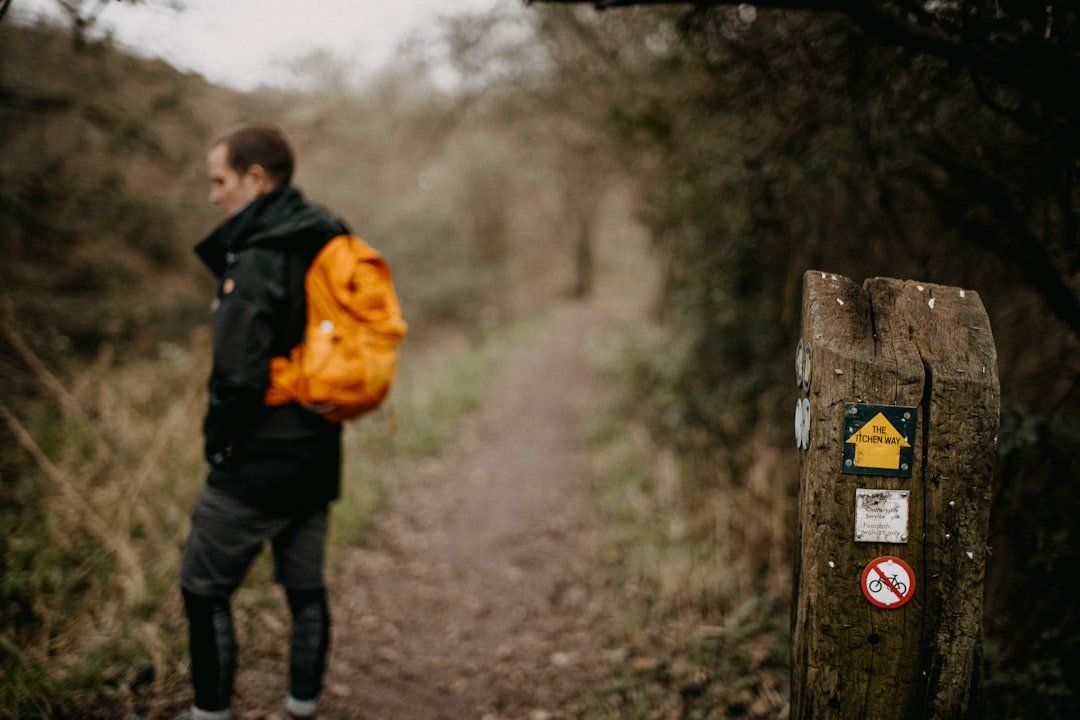
Rucking is walking with a weighted backpack. The word comes from the military rucksack, and so does most of the research, which was funded to keep soldiers marching under 40 kg rather than to help a developer get off the sofa.
That origin shapes what the evidence can and cannot tell you. Load carriage physiology is well mapped: the energy cost of walking rises with the weight you carry, in a fairly predictable way, and so does the strain on your feet, knees and back. What the fitness version of rucking adds, the claims about bone density, “functional strength” and metabolic transformation, is mostly borrowed from studies that did something other than walk, or not studied at all. This article separates the two.
What rucking is and where to start
The commercial pitch is simple, and the gear brands are candid about the starting load. GORUCK, the company most associated with the term, tells beginners that when in doubt they should start with 10 to 20 pounds, roughly 4.5 to 9 kg, and increase the weight, speed and distance over time. That is a vendor page and this site cites it only for the number, but the number is sensible: it sits at 5 to 15% of body weight for most adults.
Energy cost: the well-evidenced part
The oldest and clearest finding is that carrying weight costs energy, and where you carry it changes how much. Knapik, Reynolds and Harman’s 2004 review in Military Medicine summarises the load-carriage literature: locating the load’s centre of mass as close as possible to the body’s centre of mass gives the lowest energy cost and keeps posture closest to unloaded walking, while each kilogram added to the foot raises energy expenditure by 7 to 10% and each kilogram on the thigh by 4%. Before the 18th century, foot soldiers seldom carried more than 15 kg on the march; modern loads are far higher.
For the vest form of rucking, the reference laboratory study is Puthoff and colleagues in Medicine and Science in Sports and Exercise, 2006. Ten adults walked on a treadmill at five speeds from 0.89 to 1.79 metres per second wearing vests loaded to 0, 10, 15 and 20% of body mass. Oxygen consumption and relative exercise intensity rose with load, and the rise depended on speed: the vest costs more the faster you walk. The same study measured vertical ground reaction forces and loading rate, which also increased, a point the injury section returns to.
A 2024 study from the US Army Research Institute of Environmental Medicine updated the numbers at heavier loads. Looney and colleagues had 20 healthy, active adults (4 women, 16 men) walk for 6 to 21 minutes at up to 11 treadmill speeds under four vest loads from 0 to 66% of body mass, and used the measurements to build a calculator for vest-borne loads, validated against 12 other datasets with 264 participants. The purpose was military planning, but the outcome is useful to anyone: the metabolic cost of a vest is predictable from load and speed, and the Army publishes the calculator.
Cardio and the sedentary baseline
For someone coming off a fully sedentary week, the useful feature of rucking is not the weight but the walking. The WHO recommends adults do 150 to 300 minutes of moderate-intensity aerobic activity a week plus muscle-strengthening work on two or more days. A loaded walk at a brisk pace is a way of reaching moderate intensity without running, because the load raises heart rate and oxygen consumption at any given speed.
That is the whole of the cardiovascular argument, and it is a good one. There is no rucking-specific cardiovascular trial in sedentary adults that this site could find. The evidence is that walking is beneficial and that load makes walking harder; the inference that harder walking produces more cardiovascular adaptation is reasonable, and it is an inference.
Bone and muscle: where the marketing outruns the data
The claim that rucking builds bone is the one to examine most carefully, because it is repeated constantly and the studies cited for it did not involve walking with a pack.
The paper most often quoted is Snow and colleagues, 2000, in the Journals of Gerontology. Eighteen postmenopausal women were followed for five years. Nine did weighted-vest exercise plus jumping three times a week for 32 weeks of the year; nine active controls did not. At five years, femoral neck bone density had changed by +1.54% in the exercisers and −4.43% in the controls, and total hip by −0.82% against −3.80%. That is a real result, and it is a result for jumping and lower-body resistance work in a vest, in nine women. It says nothing about walking.
The most relevant recent trial points the other way. The INVEST in Bone Health trial, published in JAMA Network Open in June 2025, randomised 150 older adults with obesity, mean age 66.4, to weight loss alone, weight loss plus a weighted vest worn daily, or weight loss plus resistance training, for 12 months. All groups lost 9 to 11.2% of body weight, and all three experienced a similar rate of significant decreases in hip bone mineral density. The vest group wore it an average of 7.1 hours a day, replacing about 78% of the weight they lost. Wearing weight for most of the waking day did not protect bone during weight loss, and neither did supervised resistance training.
Neither study is about a healthy 35-year-old walking with 8 kg on their back. Together they say the bone claim is unsupported for walking, supported for jumping in one small old trial, and contradicted in the one large recent trial of all-day vest wear. Muscle claims are in the same position: a loaded walk raises the work done by the legs and trunk, but no trial has measured strength or muscle mass gains from rucking in previously sedentary adults.
Injury, joint load and sensible progression
The military literature is where the injury data live, and it is not reassuring at military loads. Knapik’s review lists the common injuries of prolonged load carriage as foot blisters, stress fractures, back strains, metatarsalgia, rucksack palsy and knee pain. A 2021 international review by Orr and colleagues in IJERPH notes that soldiers are often required to carry loads exceeding 45 kg and that these loads produce musculoskeletal and neurological injuries.
The same review is the best available guide to progression, because it is written for reconditioning injured soldiers. It recommends load-carriage sessions about once every 10 to 14 days alongside a programme of both resistance and aerobic training, and it recommends adjusting speed, grade and terrain to change the intensity rather than adjusting load alone. Translated for a desk worker: one or two loaded walks a week at most, unloaded walking and some strength work in between, and progress by walking faster or uphill before adding kilograms.
Puthoff’s finding that vertical ground reaction force and loading rate rise with vest load is the mechanism behind the caution. Every extra kilogram is carried through the knees and feet on every step, and for someone whose tissues are adapted to sitting, that is the variable to move slowly.
Common questions
How much weight should you start rucking with?
The main gear brand suggests 10 to 20 pounds for beginners, about 4.5 to 9 kg, and increasing gradually. The military reconditioning literature recommends progressing by speed and gradient before load and spacing loaded sessions 10 to 14 days apart. Start at the bottom of the range, particularly if you have been sedentary.
Does rucking burn more calories than walking?
Yes, in proportion to the load and speed. In a laboratory study of ten adults, oxygen consumption rose with vest loads of 10, 15 and 20% of body mass, and the increase was larger at faster speeds. A 2024 US Army study of 20 adults at loads up to 66% of body mass produced a calculator for the metabolic cost of vest loads.
Does rucking build bone density?
Not shown. The widely cited five-year study that found weighted vests protected hip bone involved jumping exercises three times a week in nine postmenopausal women, not walking. A 2025 trial of 150 older adults found that wearing a weighted vest for around seven hours a day during weight loss did not prevent hip bone loss. No trial has measured bone change from rucking in healthy adults.
Is rucking bad for your knees?
The load raises ground reaction forces and loading rate with every step, and at military loads the documented injuries include knee pain, stress fractures and back strain. At 5 to 15% of body weight in a healthy adult, no trial has measured injury rates. The reasonable inference is that risk rises with load, distance and speed, and that gradual progression is the lever you control.
The bottom line
Rucking is walking made harder, and that is exactly what it is good for. The physiology is well established: the energy cost and heart rate rise predictably with the weight you carry, which makes a loaded walk a way for a sedentary person to reach moderate intensity without running. Everything beyond that is weaker than the influencers suggest. The bone claim comes from a jumping study and is contradicted by the one large vest trial; the strength claim is untested; the injury data come from soldiers carrying three to five times what you should. Start at 10 to 20 pounds, keep the weight high and close to your back, add speed and hills before kilograms, and treat it as cardio you can do with a podcast on, not as a substitute for lifting.
Did this answer your question?
Thanks. That helps us decide what to fix.



Leave a comment