
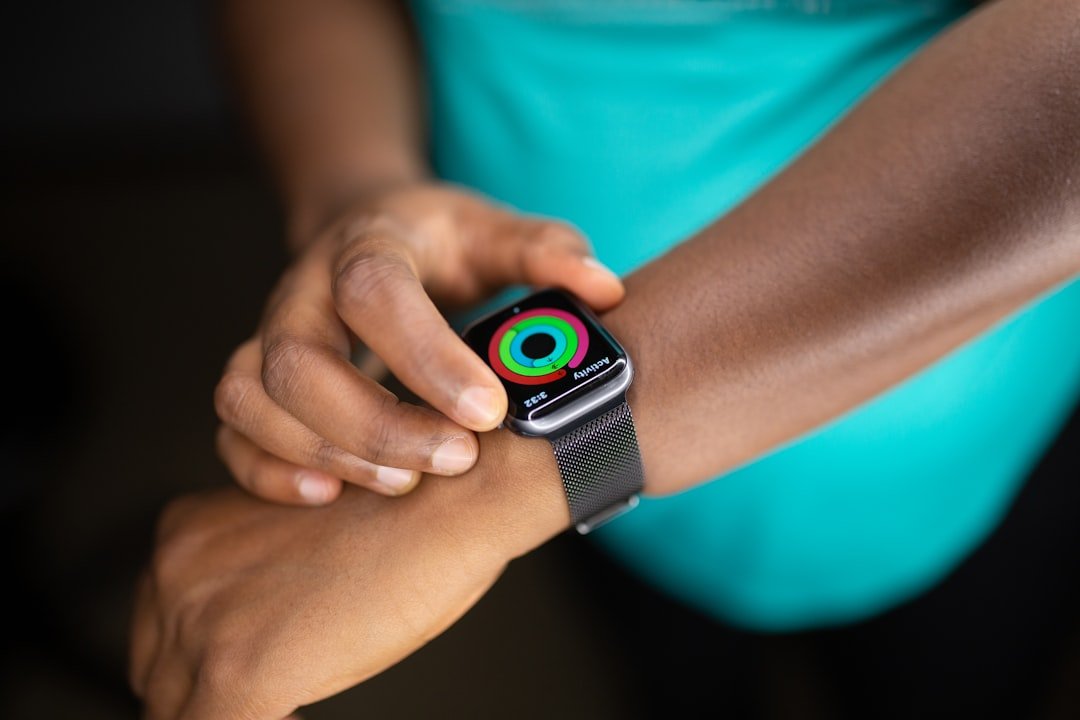
A readiness or recovery score is a proprietary blend of heart rate variability (HRV), resting heart rate, sleep and activity, compared against your own recent baseline and squashed into a single number. The components are real physiology. The blend is not validated. And the main ingredient, HRV, swings by 30 to 40 percent from one day to the next in healthy adults even when measured with a chest strap under controlled conditions. So the honest answer to “should this number change what I do today?” is: rarely on its own, and only when the trend has been consistent for days and matches how you feel.
Who sells what
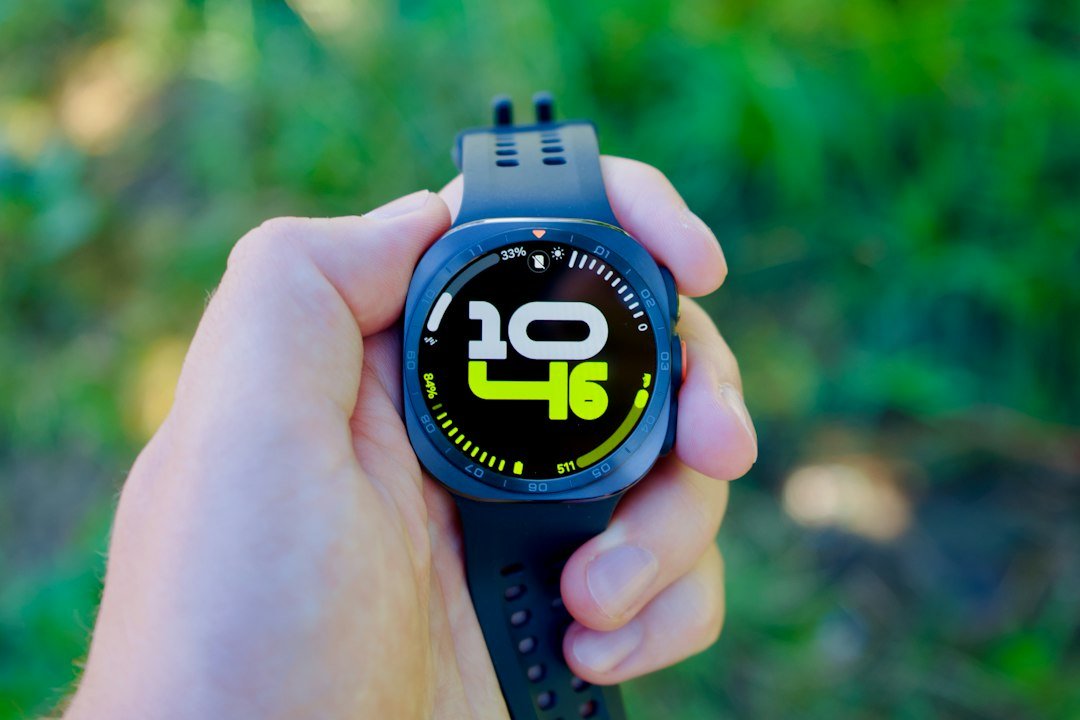
Oura’s Readiness Score “uses data from nine contributors”, including resting heart rate, HRV balance, body temperature, sleep and activity, on a 0 to 100 scale where 85 to 100 is “Optimal” and “Scores below 70 indicate that you may benefit from prioritizing rest and recovery”. Its HRV Balance contributor “compares your average HRV from the past 14 days against your three-month average”, and the app needs “up to two weeks” to learn your baseline.
Whoop sells a similar daily Recovery percentage, and Garmin, Samsung and others now ship their own versions. The details differ, but the shape is the same across the category: several physiological signals, weighted by an undisclosed formula, reduced to a single number and compared against your own recent baseline.
Apple joined the category on 9 September 2026 with Apple Watch Series 12, which “introduces readiness, a new feature that analyzes a user’s recent activity, training load, vitals, and sleep score”. It gives “a single 0-10 score with a clear, actionable recommendation: Recover, Pace Yourself, Ready, or Go For It”, and the new hardware measures HRV “up to 24 times more often”, splitting it into a “Recovery HRV” and an overall HRV. The older Vitals app, which flags a morning when “multiple metrics are outside of your typical range”, carries the footnote that it “is for wellness purposes only and not for medical use”. (All product pages accessed 11 September 2026.)
What is inside the box
Across the category these scores lean hardest on heart rate variability (HRV), the beat-to-beat variation in your pulse, alongside resting heart rate, sleep and recent activity. Apple describes its Series 12 readiness score as analysing “a user’s recent activity, training load, vitals, and sleep score”, and Oura’s documentation lists a comparable set of contributors. None of the manufacturers publish the actual formula, so no independent researcher can reproduce the number or say how much each input moves it. One more point is worth stating plainly: what a wrist or ring measures is not the electrocardiogram-based HRV of the research literature but pulse rate variability from an optical (PPG) sensor, a noisier proxy for the same thing.
Apple’s readiness score is new enough that no independent validation of it has been published as of this writing. Apple says the algorithm “was developed using data from the Apple Heart and Movement Study, in collaboration with exercise scientists and physicians at Apple”, an in-house dataset.
HRV is noisy, even when measured well
The best test of whether an overnight number should steer your day is how stable that number is when nothing has changed. A 2025 study in Sensors had 41 healthy adults record five-minute morning HRV for 14 days using a Polar H10 chest strap and the Kubios app, a research-grade setup. The average coefficient of variation in RMSSD (the HRV metric most wearables use) was 0.37, with individuals ranging from 0.14 to 0.71. The authors’ translation: “many participants experienced 30–40% day-to-day fluctuations in HRV relative to their own mean.” Their conclusion follows: “A single-day dip or rise often falls within a participant’s normal range and may not reflect a meaningful change.”
That study did find associations between higher HRV and better self-reported sleep, less fatigue and less stress, so HRV is not meaningless. But the authors describe the effect sizes as modest, note the sample was small and skewed towards younger adults, and write that “At present, few of these readiness indices have been tested in prospective, real-world studies.”
The same group had earlier tested the wrist. In a 2024 study of 39 healthy adults providing 316 paired morning readings over 14 days, Apple Watch Series 9 and Ultra 2 “tended to underestimate HRV by an average of 8.31 ms compared to the Polar H10 (p = 0.025), with a mean absolute percentage error (MAPE) of 28.88%”. The 95% limits of agreement ran from about minus 54 ms to plus 37 ms. Equivalence testing showed the watch “did not fall within the pre-specified equivalence margin of ±10 ms”. Resting heart rate, by contrast, was close, with a MAPE of 5.91%. In short: the watch measures heart rate well and HRV loosely, and the loose part is what the scores lean on. Apple’s Series 12 has new sensors and claims better accuracy, but the independent literature has not caught up.
There is also a daytime problem. HRV is most interpretable at rest; everyday movement, talking and eating add noise when it is sampled through the day rather than overnight. This is relevant to Apple’s new daytime vitals view. Overnight is the cleaner window; daytime HRV is harder to interpret.
What the number can and cannot tell you
Put the pieces together. The inputs are noisy, the weighting is secret, and two of the inputs (sleep and HRV) are partly the same information counted twice. On a single morning, a score of 62 against your usual 75 is well within the day-to-day noise of the dominant input.
What the scores do reasonably well is surface sustained departures from your own baseline. Several nights of lower HRV and higher resting heart rate together with a temperature shift is the kind of multi-day pattern the trackers flag as a possible sign of illness or overload, and it is the pattern a person might not notice on their own. Trend-based interpretation is what the HRV researchers recommend too.
What the scores cannot do is diagnose anything, and none of the manufacturers claim otherwise. Apple’s Vitals wording is “wellness purposes only”. If a score is persistently low and you feel unwell, that is a prompt to see a clinician, not a reason to search for a supplement.
There is a subtler risk for people who work at screens all day and like dashboards: letting a number decide how you feel. If the score says “Recover” and you feel fine, the score is probably measuring noise. If it says “Go For It” and you feel wrecked, trust the wrecked. Outsourcing that judgement to an opaque model is a small version of the pattern in cognitive offloading and the AI confidence gap. And if you are tempted to chase a higher HRV number directly, read can you regulate your vagus nerve first.
For how we decide which validation studies to trust, see how we research.
Common questions
What is a readiness score based on?
Mostly heart rate variability, plus resting heart rate, sleep and recent activity, each compared with your personal baseline. A 2025 review of 14 such scores found HRV in 86% of them and resting heart rate in 79%. The exact weightings are proprietary; no manufacturer in the review disclosed its formula.
Is HRV stable enough to guide daily decisions?
Not on a single reading. In a 14-day chest-strap study of 41 adults, day-to-day HRV varied by an average coefficient of variation of 0.37, meaning many people saw 30 to 40 percent swings around their own mean. Researchers recommend looking at multi-day trends rather than reacting to one morning’s number.
How accurate is Apple Watch HRV?
In a 2024 validation of Apple Watch Series 9 and Ultra 2 against a Polar H10 chest strap, the watch underestimated HRV by 8.31 ms on average with a 28.88% mean absolute percentage error and did not meet a ±10 ms equivalence margin. Resting heart rate was accurate (5.91% error). Apple Watch Series 12 has new sensors but no independent validation yet.
Are Oura and Whoop readiness scores validated?
The individual signals (heart rate, HRV) have supporting science, but the composite scores are proprietary: manufacturers do not publish the formulas, so independent researchers cannot reproduce them, and few readiness indices have been tested in prospective, real-world studies. Treat the scores as trend indicators, not measurements.
Should I skip a workout because my recovery score is low?
A single low score is usually within normal night-to-night variation. If several days in a row are low and you also feel tired, run down or unwell, that is worth respecting, and persistent symptoms deserve a clinician. If the score is low but you feel fine, the score is the less reliable of the two.
Did this answer your question?
Thanks. That helps us decide what to fix.



Leave a comment