
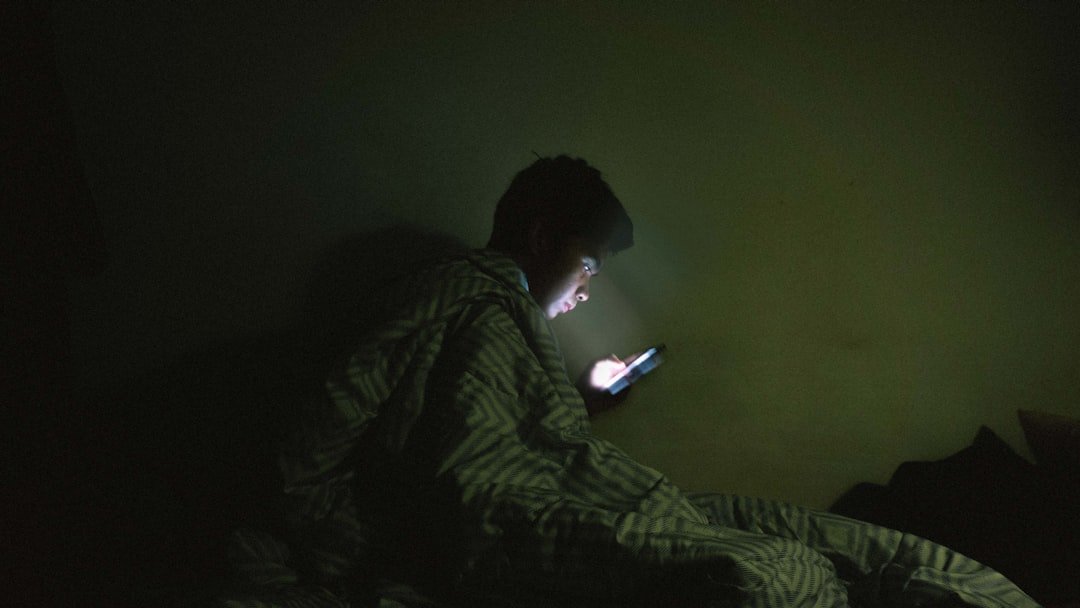
You finish work, get through dinner and chores, and finally sit down with your phone or a series. You know you should sleep. You stay up anyway, because this is the only part of the day that feels like yours.
That pattern now has a popular name, revenge bedtime procrastination: delaying sleep to claw back leisure or a sense of control after a day that offered neither. The research term is simply bedtime procrastination, and it has been studied since the mid-2010s.
The findings are fairly consistent about who does it and that it goes with worse sleep. They are much weaker on cause and effect, because most studies are one-off surveys in which people report on themselves. The more useful news is that a handful of trials have tested specific ways to reduce it.
What researchers mean by bedtime procrastination
Dutch researchers introduced the concept, defining it as failing to go to bed at the intended time when no external circumstances prevent you from doing so. Two features matter. The delay is voluntary, and you know it is not in your interest. Staying up for a crying baby or an on-call shift does not count.
In a representative sample of Dutch adults (N = 2431), the same group found that a large share of people regularly go to bed later than they would like. People with weaker self-regulation reported more insufficient sleep, and bedtime procrastination statistically accounted for that link.
“Revenge” is a popular label rather than a research term, and it adds a motive: the delay is about reclaiming time. Research on that motive specifically is still limited, but some findings fit it. A study of military servicemembers found that those reporting higher levels of role overload also reported greater engagement in bedtime procrastination. That matches the idea that people with little control over their days push their own time into the night. It was a cross-sectional survey in an unusual population, so it shows association only.
Who does it, and why
A systematic review and meta-analysis pooled the available studies. Bedtime procrastination had a moderate negative association with self-control. It was also associated with being an evening type, shorter sleep, poorer sleep quality and more daytime fatigue. The authors rated the certainty of the evidence as low.
Self-control is not the whole story. A daily diary study of employees found that on evenings when they had fewer self-regulatory resources left, they procrastinated less on going to bed, not more. The authors said this contradicts the prevailing idea that bedtime procrastination is the result of a lack of self-regulatory resources. The same study found later chronotypes, often called night owls, reported more bedtime procrastination on work days.
A reasonable reading is that bedtime procrastination sits where several things meet: a demanding day, a body clock that runs late, a tempting activity, and a general tendency to favour tonight over tomorrow.
Phones: cause, symptom, or both
Phones are the obvious suspect, and the data broadly support that, with a twist.
In a survey of Spanish adults, problematic smartphone use, bedtime procrastination and poor sleep quality went together, and correlation analysis showed positive associations between the three main variables. A single survey like that cannot say which comes first.
A longitudinal study of university students, which followed the same people over time, went further. It found a bidirectional association between bedtime procrastination and problematic phone use. Heavy phone use seems to feed later bedtimes, and delaying bed also seems to feed heavier phone use. The phone is both a cause and a symptom.
The honest limits of the evidence
Most of this literature is cross-sectional and self-reported. People estimate their own bedtimes, sleep and self-control, often in one questionnaire, and many samples are students. That supports the conclusion that bedtime procrastination is common and linked to worse sleep. It says much less about what causes it.
The research also measures sleep outcomes, such as duration, quality and next-day fatigue. The long-term health effects of the habit itself have not been studied directly.
What the evidence supports doing
Standard sleep hygiene lists, such as keeping the room dark or cutting late caffeine, do not target the central problem, which is choosing to stay up. A few trials have tested approaches aimed at that choice.
Plan around your obstacles. Two randomised trials in undergraduates tested a short online exercise called mental contrasting with implementation intentions. You picture the goal, name what usually gets in the way, and set if-then plans, such as “if I catch myself starting another episode after my bedtime, then I put the phone on charge in another room”. Compared with control exercises, one of which was a sleep hygiene exercise, it increased commitment and led to a reduction in the average minutes of bedtime procrastination per night.
Structured behavioural help. A small randomised trial in young adults compared a short behavioural programme, which included working out what triggers and rewards the delay, with a waiting list. The treatment group improved on bedtime procrastination duration measured by sleep diary (-46.29 min, d = 1.22). With a waiting-list comparison and a small sample, the true effect is probably smaller than that.
Targeting evening screen use. A pilot trial of an online programme to cut evening device use in new career starters found that all groups, including the active control, showed an increase in daily sleep duration (M = 12.7 min per day). Because the control group improved too, the result cannot be credited to the programme itself.
Putting that into practice:
– Set a realistic bedtime and write down one or two if-then plans for the moments you usually slip. – Protect a short slot of leisure earlier in the evening, so the night is not your only free time. – Charge your phone outside the bedroom or out of arm’s reach. – If the root cause is workload, treat it as a work problem as much as a sleep problem.
The first point has trial support. The last three follow from the research on motives and phones rather than being tested directly.
Common questions
What is revenge bedtime procrastination?
It is staying up later than you meant to, with nothing forcing you to, in order to reclaim leisure or a sense of control after a busy day. Researchers call the behaviour bedtime procrastination, and the “revenge” label adds the motive of taking back your time.
Is revenge bedtime procrastination bad for you?
Studies consistently link bedtime procrastination with shorter sleep, poorer sleep quality and more daytime fatigue. Most of that evidence comes from surveys, so it shows association rather than proof of harm, and the long-term health effects of the habit have not been studied directly.
Does using my phone in bed cause bedtime procrastination?
Heavy phone use and bedtime procrastination go together, and a longitudinal study found the relationship runs in both directions. The phone appears to be both a trigger for staying up and something people reach for once they are already delaying sleep.
How do I stop revenge bedtime procrastination?
The best-tested approach is simple planning: identify what usually keeps you up and set specific if-then plans for those moments. Small trials of structured behavioural programmes also look promising, but the evidence base is still small.
The bottom line
Bedtime procrastination is common, linked to worse sleep, and tangled up with late body clocks, phones and days that leave no free time. The research is mostly survey-based, so be cautious about confident claims on causes. The most practical tested step is to plan for your specific weak moments rather than relying on willpower late at night.
Did this answer your question?
Thanks. That helps us decide what to fix.



Leave a comment