
Why are video calls so tiring? In a within-subjects laboratory experiment with 35 participants, 50 minutes of videoconferencing produced changes in the nervous system that the authors interpreted as fatigue, compared against the same lecture delivered face to face. Separately, a four-week field experiment that manipulated whether employees kept their camera on found the camera-on condition linked to daily feelings of fatigue. The effect is measurable; the confident explanations for why are still untested hypotheses.
Suppose tomorrow is a day of video meetings. Hypothetically: this site has run no such day and surveyed no one about theirs. You end it flatter than a day of hard debugging, and the suspicion that you are being precious about it has been tested.
Most of what circulates sits in the weakest tier of evidence, cross-sectional self-report, where a scale correlates with things and the correlations get written up as causes. Above it sits longitudinal self-report, where the time ordering is known, and above that sit experiments. What follows is organised by that hierarchy.
What the EEG study actually measured
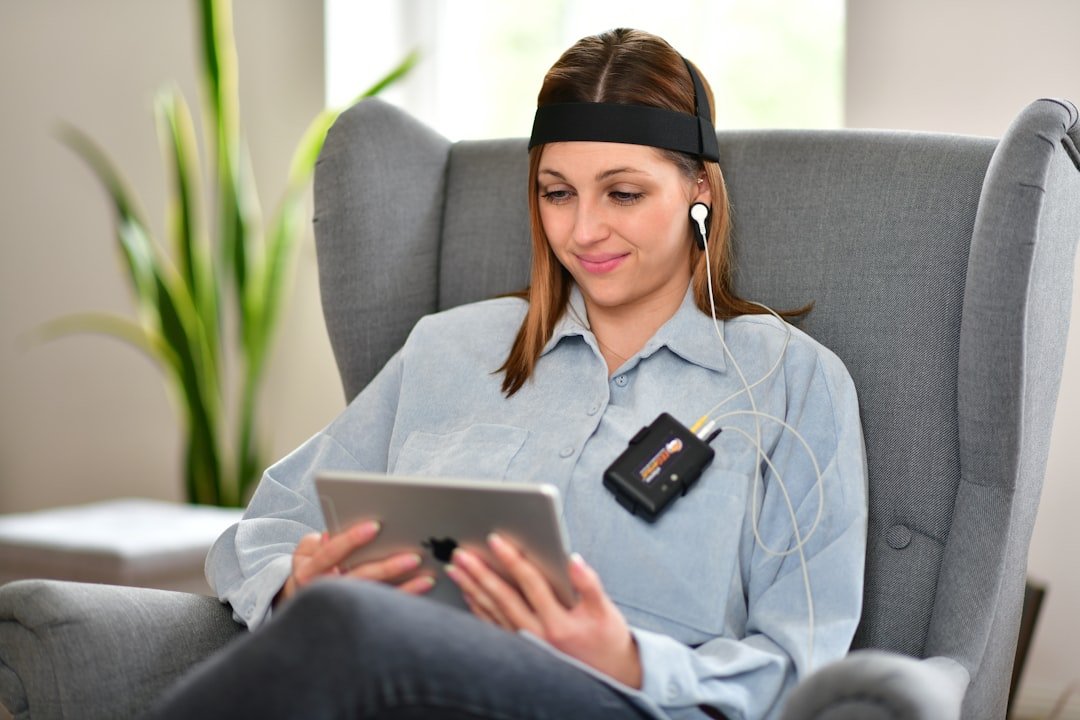
The strongest objective evidence here is a within-subjects laboratory experiment with 35 participants, in which the same university lecture was delivered face to face and by videoconference. The researchers collected electroencephalography, continuous and event-related, plus heart rate and heart rate variability. Their conclusion is that 50 minutes of videoconferencing, compared against the face-to-face condition, “results in changes in the human nervous system which, based on existing literature, can undoubtedly be interpreted as fatigue”.
The word doing the work there is interpreted. Nobody measured tiredness directly; they measured brain and cardiac signals and inferred fatigue from what those signals mean in prior literature. The other limits matter: 35 people, one 50-minute session, a passive listening task, and a university lecture rather than a working meeting where you have to speak and track who is about to interrupt. My own read, not the paper’s: a lecture is the easiest possible videoconference, and the effect showed up anyway.
Why are video calls so tiring? The mechanisms are still hypotheses

You have probably read explanations involving unnatural eye contact, delayed audio, or reading faces in a grid. The most cited source for that family is a conceptual paper in Electronic Markets that develops a definition of Zoom fatigue and a framework of root causes, drawing on media naturalness theory and on work across behavioural science and neuroscience. In its own words, “hypotheses are outlined”: it contains no data, so every root cause in it is a proposal to be tested, not a mechanism found. And a conflict of interest, since the two papers get cited together as independent support: Riedl, behind that framework, is also an author of the EEG experiment above.
The honest position: decent evidence that the medium costs something, plus untested hypotheses about what is expensive. Anyone naming the mirror image of your own face, or the latency, as the culprit is ahead of the evidence. That is my read rather than a finding.
The one intervention with a field experiment behind it

If you want advice with an experiment underneath it, one candidate exists, and it is not “have fewer meetings”. A four-week within-person experience sampling field experiment manipulated camera use and drew on 1,408 daily observations from 103 employees. The camera-on condition was linked to daily feelings of fatigue, and that daily fatigue in turn related negatively to voice and engagement during virtual meetings. Supplemental analyses suggested fatigue affects same-day and next-day meeting performance. A manipulated condition in a real workplace, not a questionnaire, is what makes this the practical anchor. Two caveats travel with it: it ran at a single company during the pandemic, and the effect was moderated, which brings us to the unsettled part of this literature.
Two studies, two different answers on gender
The camera experiment predicted and found moderation by gender and organizational tenure: camera use was more fatiguing for women and for newer members of the organization. That is part of the finding, not a footnote: “just turn your camera off” is advice whose benefit is not evenly distributed.
There is also an EEG experiment with 32 volunteers, 16 men and 16 women, each attending a live video meeting with self-view on and off. It found significantly greater alpha activity with self-view on, no significant change across a 20-minute session, and no significant difference between men and women. The authors state that their study does not replicate previous findings that women experience greater videoconferencing fatigue from the self-awareness of seeing themselves on screen.
These are not the same claim measured twice. One is a four-week field manipulation of camera use measuring self-reported daily fatigue; the other manipulates self-view specifically and measures alpha power, an indirect index of fatigue, in 32 people. The gender question is open.
Belongingness beats hardware settings
A mixed-methods study collected data each hour across five workdays from 55 remote employees, and modelled 279 videoconference meetings. Turning off the microphone and higher feelings of group belongingness were both related to lower post-videoconference fatigue, and belongingness came out as the most consistent protective factor.
The microphone result is the one to be careful with. This was observational within-person data, not an experiment, so it establishes association and not direction. Muting may simply be what passive attendees do, marking a meeting you did not need to be in. Belongingness is the sturdier finding, and the awkward one: it is not a setting.
What the self-report tier can and cannot tell you
A weighted national US survey of 902 adults who had shifted to videoconferencing at work found a three-item Zoom Fatigue Scale with good internal consistency. Higher scores related to being married, nonwhite race, post-high school education, severe mental illness, greater loneliness, lower social support, lacking money for food, and more weekly calls. Depressive symptoms were significantly associated even after adjusting for demographic, psychosocial and clinical covariates.
The takeaway is narrow: self-reported fatigue tracks with social and material circumstances, so meeting count is not the whole story. It cannot tell you videoconferencing causes depression, loneliness or any clinical condition, because it is cross-sectional and the direction is undetermined. The sample was also restricted to reported annual gross income under $75,000.
The one study here with time ordering is a two-wave survey of 155 workers, measured two months apart. Videoconference fatigue at Time 1 positively predicted physical strain at Time 2, but was not associated with psychological strain at Time 2. That null deserves as much airtime as the positive result. A positive association with psychological strain did appear, but only in remote workers aged 55 or older: a subgroup finding in a 155-person self-report study, and a lead for further work rather than a fact about anyone.
None of this is diagnostic. If the flatness is persistent, or comes with low mood, sleep disruption or loss of interest in things you normally like, that is a conversation for a clinician, not a settings change. See our medical disclaimer.
Common questions
Is video call fatigue a real physiological effect or just people complaining?
There is objective evidence for it, with limits. A within-subjects laboratory experiment with 35 participants compared the same university lecture delivered face to face and by videoconference while recording EEG and heart rate variability, and reported that 50 minutes of videoconferencing produced nervous-system changes the authors interpret as fatigue based on existing literature. That is an inference from physiological markers rather than a direct measurement of tiredness, in one passive listening session in a student setting. Worth disclosing: Riedl, an author of that study, also wrote the widely cited conceptual framework of Zoom fatigue’s root causes, which contains no data and outlines hypotheses only.
Does turning my camera off actually reduce fatigue?
It is the only intervention here with an experimental field manipulation behind it. A four-week within-person experience sampling experiment at a single company during the pandemic, using 1,408 daily observations from 103 employees, found the camera-on condition linked to daily fatigue, which in turn related negatively to voice and engagement in meetings. The same study predicted and found camera use more fatiguing for women and for newer members of the organization, so the benefit is not evenly distributed.
Do women experience more videoconferencing fatigue than men?
The evidence disagrees, on two different measures. A four-week camera field experiment with 103 employees predicted and found gender moderation, with camera use more fatiguing for women. A separate EEG experiment with 32 volunteers, evenly split by gender, manipulated self-view rather than camera use and found no significant difference between men and women in alpha activity, explicitly failing to replicate the idea that women tire more from seeing themselves on screen. Different designs and outcome measures, so the question is open.
Should I stay on mute during video meetings to feel less drained?
An hourly study of 55 remote employees across five workdays, modelling 279 videoconference meetings, found turning off the microphone related to lower post-videoconference fatigue. The design is observational, so it shows association without establishing direction, and muting may mark passive attendance rather than cause the lower fatigue. In the same study, group belongingness was the most consistent protective factor, pointing at meeting composition rather than at a button.
Can video call fatigue lead to burnout or depression?
No study in this evidence base supports that causal claim. A survey of 902 US adults found self-reported Zoom fatigue associated with depressive symptoms even after adjustment, but it is cross-sectional, so the direction is undetermined. A separate two-wave study of 155 workers found videoconference fatigue predicting physical strain two months later, but specifically not psychological strain, except among remote workers aged 55 or older. Persistent low mood or exhaustion is for a clinician, not for a fatigue scale.
What to do with an unsettled literature
Most people want a setting to change. The evidence answers a smaller question better: whether the effect is real. It appears to be, on physiological measures in a lab and on daily self-reports under a manipulated field condition. Past that, one intervention has a field experiment and a moderation result attached, one association is easy to over-read, and the mechanism stories are hypotheses their own author framed as such.
That is a more useful place to stand than it looks. The most consistent protective factor found anywhere here was belongingness, a property of the meeting and the team rather than of the software. My own reading, not a finding: no amount of camera toggling substitutes for a meeting that did not need to exist. Our research method sets out how we weigh evidence tiers, and if you are auditing the physical side of a desk day, how often you get up from sitting rests on firmer ground.
Did this answer your question?
Thanks. That helps us decide what to fix.

Leave a comment